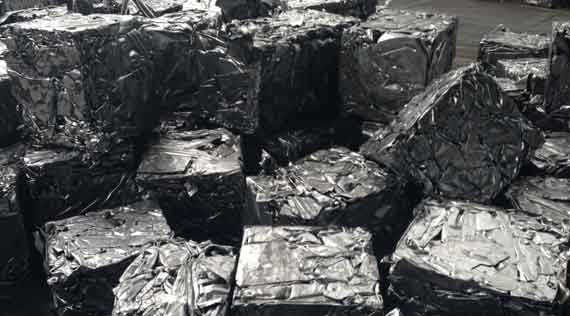
#1 Bundle Scrap is a prepared ferrous scrap grade made primarily from clean, new black steel sheet, manufacturing clippings and skeleton scrap that has been compressed or tightly secured into dense bundles.
The grade is commonly generated by stamping plants, metal fabricators, appliance manufacturers and other industrial operations producing clean sheet-steel scrap. Because #1 Bundles have strict composition and preparation requirements, correct segregation is important for both pricing and mill acceptance.
What Is #1 Bundle Scrap?
Under current ReMA ferrous scrap specifications, No. 1 Bundles, Code 208, consist of new black steel sheet scrap, clippings or skeleton scrap compressed or hand bundled to charging-box size.
The finished bundles must weigh at least 75 pounds per cubic foot. Hand bundles must also be secured tightly enough to withstand handling with a magnet.
The specification may include tightly secured Stanley balls, mandrel-wound bundles, skeleton reels and chemically detinned material.
What Materials Are Not Allowed in #1 Bundles?
Standard #1 Bundles should not contain:
- Old automobile body or fender stock
- Galvanized or other metal-coated steel
- Limed material
- Vitreous-enameled steel
- Electrical sheet containing more than 0.5% silicon
- Other material that does not meet the receiving buyer's agreed specification
This distinction is important because older descriptions sometimes incorrectly group galvanized or zinc-coated steel with #1 Bundles. Under current ReMA guidelines, galvanized sheet is associated with #2 Bundle Scrap, not standard #1 Bundles.
How to Identify #1 Bundle Scrap
#1 Bundle Scrap is typically recognized by both the material going into the bundle and the way the finished scrap has been prepared.
Typical characteristics include:
- New factory-generated steel scrap
- Clean black steel sheet
- Sheet clippings and stampings
- Skeleton scrap left after stamping or punching operations
- Dense hydraulic bales or tightly secured hand bundles
- Minimal coatings, contamination or foreign material
The finished bundle should be dense and compact enough for efficient handling and furnace charging.
Where Does #1 Bundle Scrap Come From?
#1 Bundles are primarily an industrial and manufacturing scrap stream rather than a typical household or demolition grade.
Common sources include:
- Automotive stamping plants
- Appliance manufacturing
- Metal fabrication shops
- Steel service centers
- Sheet-metal manufacturing
- Industrial stamping and punching operations
- Manufacturers producing clean steel sheet offcuts
#1 Bundle vs. #2 Bundle Scrap
The difference between #1 and #2 Bundles is primarily the type and condition of the steel being compressed.
#1 Bundle Scrap is made from clean, new black steel sheet and production scrap and must be free of metal-coated material.
#2 Bundle Scrap may contain old black and galvanized steel sheet that has been hydraulically compressed to charging-box size.
Keeping the two grades separate is important because coatings and obsolete material can affect steelmaking chemistry, furnace yield and the buyer's price.
#1 Bundle vs. #1 Busheling Scrap
#1 Busheling Scrap and #1 Bundles often originate from similar clean manufacturing operations, but they differ mainly in preparation.
Busheling is generally sold as clean factory-generated sheet clippings and stampings within specified dimensional limits. #1 Bundle material has been compressed or tightly secured into dense bundles.
For generators producing large quantities of prime manufacturing scrap, the preferred grade may depend on the receiving mill's handling, freight and furnace requirements.
Why Is Bundle Density Important?
The minimum density requirement of 75 pounds per cubic foot helps ensure the bundle is compact enough for handling, transportation and furnace charging.
Loose light-gauge sheet occupies substantially more space than compressed scrap. Bundling increases density, which can improve storage and transportation efficiency and make the material easier to handle with scrap-processing equipment.
What Affects #1 Bundle Scrap Prices?
#1 Bundle Scrap prices depend on regional steel-mill demand, material cleanliness, bundle density, chemistry, quantity, freight, preparation and buyer specifications.
Prime ferrous scrap markets can also move differently from obsolete or lower-grade steel scrap, so a generic steel price should not be treated as a guaranteed #1 Bundle buying price.
For current ferrous-market information, review RecyclingMonster's Steel Scrap Prices. You can also compare Busheling Prices for another major prime manufacturing scrap grade.
Always check the location, unit and last-updated date attached to a price before comparing offers.
How to Maximize #1 Bundle Scrap Value
- Keep new black sheet scrap separate from galvanized and coated steel.
- Do not mix obsolete automobile body or fender material into the load.
- Keep production scrap free of excessive oil, dirt and foreign material.
- Confirm the receiving buyer's required bundle dimensions and density.
- Keep high-quality prime scrap separate from mixed ferrous material.
- Confirm chemistry or residual limits when supplying a steel mill directly.
- Compare quotes using the same unit and delivery basis.
Where Can You Sell #1 Bundle Scrap?
#1 Bundles are generally marketed to ferrous scrap processors, steel mills and scrap yards that handle industrial steel grades.
Use RecyclingMonster's Metal Recycling Center Directory to find scrap processors and metal recycling facilities by location.
Because #1 Bundle is a specification-driven industrial grade, sellers should confirm that a buyer actually purchases prime bundled scrap rather than assuming every general scrap yard will recognize or separately price the grade.
Have Large Quantities of #1 Bundle Scrap?
Manufacturing plants and high-volume fabricators generating #1 Bundle material should consider container service, baling requirements, pickup schedules, freight and direct mill specifications when marketing the scrap.
Large generators may also benefit from keeping production scrap segregated at the point of generation before bundling. Once mixed or contaminated material has been compressed into a bale, correcting the grade can be difficult and costly.