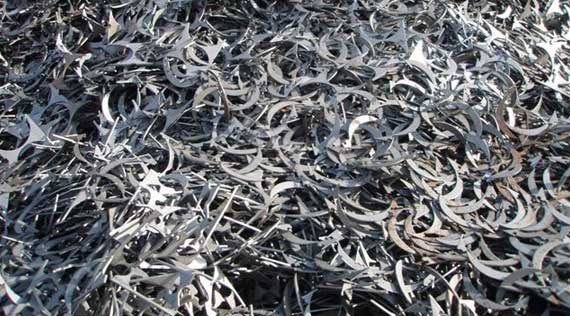
#1 Busheling Scrap is a high-quality ferrous scrap grade consisting primarily of clean, new steel generated during manufacturing, stamping, cutting and fabrication operations.
Unlike many obsolete steel grades recovered from end-of-life products or demolition, busheling is generally created as a manufacturing byproduct before the steel enters service. That makes correct segregation especially important because clean prime scrap can lose grade value when mixed with coated, obsolete or contaminated steel.
What Is #1 Busheling Scrap?
Under current ReMA ferrous scrap specifications, No. 1 Busheling, Code 207, consists of clean steel scrap with a maximum size of 2 feet by 5 feet.
The grade can include new factory-generated material such as sheet clippings, stampings and similar clean production scrap.
#1 Busheling must not contain old automobile body or fender stock and should be free of metal-coated, limed or vitreous-enameled material. Electrical sheet containing more than the permitted silicon level is also excluded from the standard grade.
How to Identify #1 Busheling Scrap
#1 Busheling is generally identified by its source, cleanliness and preparation rather than by appearance alone.
Typical characteristics include:
- New factory-generated steel scrap
- Clean sheet-steel clippings
- Stampings and punching scrap
- Production offcuts and skeletons
- No old automobile body or fender stock
- No galvanized or other metal-coated sheet in material sold to the standard No. 1 Busheling specification
- Pieces prepared within the buyer's dimensional requirements
Where Does Busheling Scrap Come From?
Busheling is primarily an industrial manufacturing scrap stream.
Common sources include:
- Automotive stamping plants
- Appliance manufacturers
- Steel service centers
- Sheet-metal manufacturers
- Industrial punching and blanking operations
- Metal fabrication plants
- Manufacturers producing clean steel offcuts and stampings
#1 Busheling vs. #1 Bundle Scrap
#1 Bundle Scrap and #1 Busheling often originate from similar clean manufacturing operations, but the commercial grades differ primarily in preparation.
Busheling consists of clean factory-generated steel within specified dimensional limits. #1 Bundle material is compressed or tightly secured into dense bundles for handling and furnace charging.
The preferred preparation can depend on the receiving mill's furnace, handling equipment, freight requirements and purchasing specification.
#1 Busheling vs. #1 HMS
#1 Heavy Melting Steel is a different ferrous scrap grade generally consisting of heavier wrought iron and steel prepared to specified furnace-charging dimensions.
Busheling is primarily clean new production scrap, while HMS often comes from structural steel, machinery, demolition and other heavier sources.
Although both are used as steelmaking feedstock, sellers should not use the terms interchangeably because composition, dimensions and buyer specifications differ.
Why Is Busheling Considered Prime Scrap?
Busheling is commonly described as a prime ferrous scrap because it is generated directly from new steel during manufacturing rather than recovered after years of service.
Its controlled source can provide steelmakers with a comparatively consistent metallic feedstock, especially when the material remains properly segregated and free of coatings and other residuals.
What Materials Can Downgrade Busheling?
Material may fail to meet a buyer's #1 Busheling specification when it contains prohibited or excessive contamination.
Potential downgrade issues include:
- Galvanized or other metal-coated sheet
- Old automobile body or fender stock
- Vitreous-enameled steel
- Excessive oil, dirt or foreign material
- Electrical steel outside the required chemistry
- Oversize pieces
- Mixed obsolete steel
- Nonferrous attachments
The final grade is determined by the receiving buyer's agreed specification.
What Affects #1 Busheling Scrap Prices?
#1 Busheling Scrap prices can vary with regional steel-mill demand, scrap supply, material chemistry, preparation, quantity, freight, location and buyer requirements.
Busheling is often traded by ton rather than by pound, and different yards may quote in gross tons, net tons or metric tons. Always compare prices using the same unit and delivery basis.
For current market information, view RecyclingMonster's Busheling Prices page or compare the broader Steel Scrap Prices section.
Always check the location, price unit and last-updated date attached to individual market observations.
How to Maximize #1 Busheling Scrap Value
- Keep clean factory steel separate from obsolete scrap.
- Do not mix galvanized or coated sheet into a load sold as standard #1 Busheling.
- Keep nonferrous metals and foreign material out of the scrap stream.
- Maintain separation at the point of generation whenever possible.
- Confirm maximum piece dimensions with the receiving buyer.
- Preserve material and production records for large industrial programs where useful.
- Compare buyer quotes using the same weight unit, freight basis and preparation standard.
Where Can You Sell #1 Busheling Scrap?
Busheling is purchased by ferrous scrap processors, large metal recycling centers, brokers and steel mills that handle prime industrial scrap.
Use RecyclingMonster's Metal Recycling Center Directory to locate scrap processors and metal recycling facilities by location.
Because busheling is a specification-driven industrial grade, sellers should confirm that a facility purchases and separately prices prime manufacturing scrap before arranging delivery.
Have Large Quantities of #1 Busheling?
Automotive plants, appliance manufacturers, fabricators and other large industrial generators can produce busheling continuously as part of normal manufacturing operations.
For bulk programs, buyers may provide roll-off containers, trailers or scheduled pickup service. Large generators should compare container requirements, pickup schedules, freight, minimum quantities, contamination allowances and delivered-versus-pickup pricing.
Segregating busheling directly at the production line can also help prevent clean prime scrap from being mixed with lower-value ferrous material later in the recycling process.