 By Anil
Mathews | Published on October 02, 2026 12:00:00 AM
By Anil
Mathews | Published on October 02, 2026 12:00:00 AM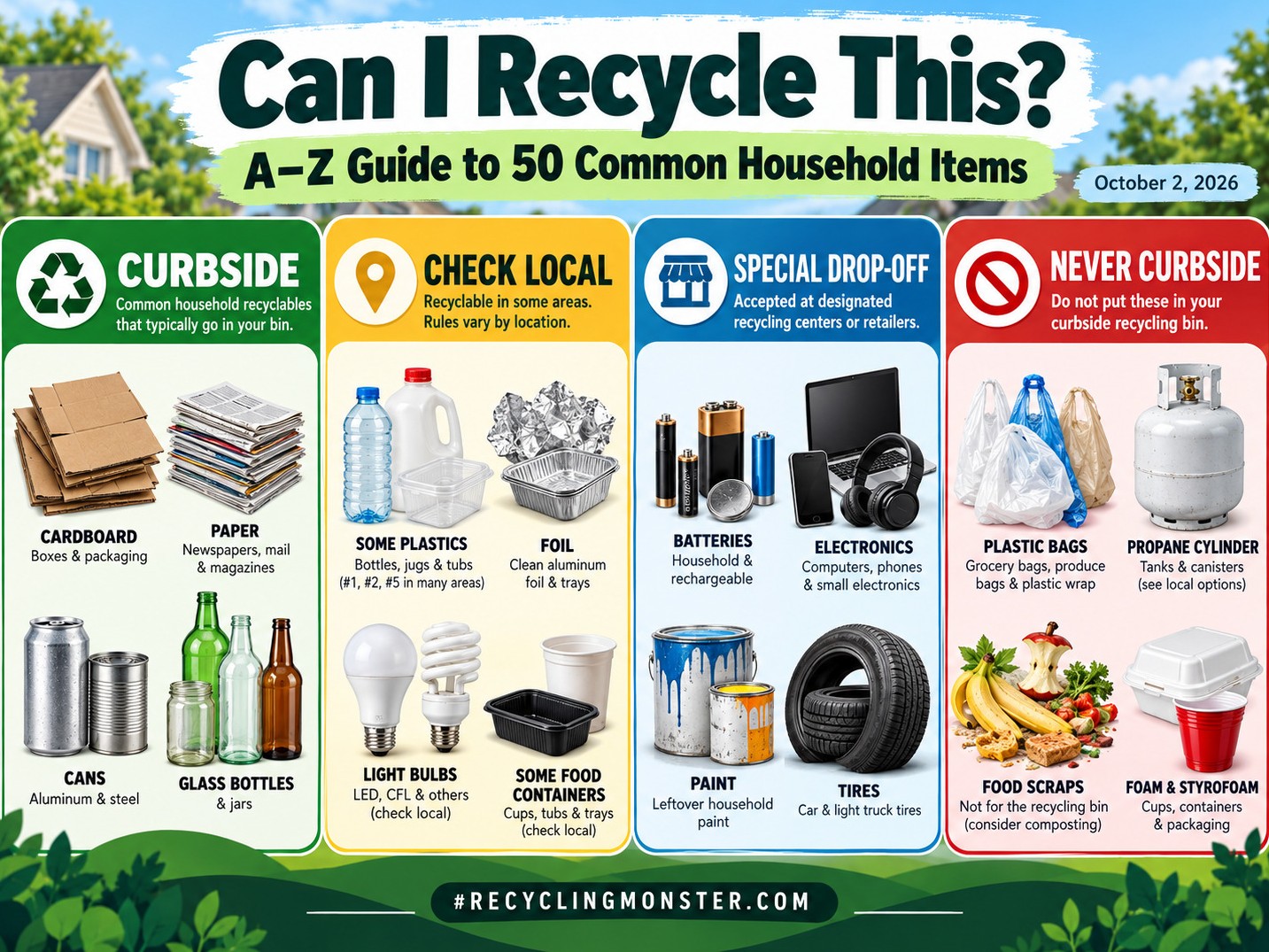
- Do not place an item in the recycling bin simply because it looks recyclable or carries a recycling symbol.
- Batteries, electronics, household hazardous waste, propane cylinders and sharps require separate handling.
- Plastic bags and film generally belong at specialty or retail collection points, not in curbside recycling.
- Food and liquids should stay out of the recycling bin; food scraps may have a composting or organics option.
- If curbside collection does not accept an item, use RecyclingMonster to search for a recycler by material and location.
How to Use This A–Z Recycling Guide
Start with the item you want to discard and check its status in the table. Usually curbside means the material is widely collected, although local confirmation is still recommended. Check local means programs differ substantially. Special drop-off means the item generally needs a retailer, recycling center, take-back program, household hazardous waste site or another dedicated collection route. Never curbside identifies items that should stay out of a standard household recycling bin because of safety, contamination or processing concerns.
When the local answer is not obvious, RecyclingMonster’s Recycle an Item finder lets you search by material and location before making a trip.
Can I Recycle This? 50 Common Household Items
| Item | Quick Answer | Best Route | Preparation or Safety Note |
|---|---|---|---|
| 1. Aerosol cans | Check local | Empty metal aerosol cans may be accepted by some recycling programs. Partially full or unemptied cans may require household hazardous waste handling. | Do not puncture or drain a pressurized can unless your local program specifically instructs you to do so. |
| 2. Aluminum cans | Usually curbside | Place empty beverage cans in curbside recycling where accepted. | EPA advises that cans generally should not be crushed in single-stream programs because flattened cans can be harder to sort. |
| 3. Aluminum foil | Check local | EPA identifies aluminum foil as recyclable, but local acceptance varies. | Remove food residue before recycling. |
| 4. Appliances | Special drop-off | Donate working appliances or use an appliance, household or metal recycler. | Refrigerators, freezers, air conditioners and other refrigerant-containing appliances require special handling. Do not cut refrigerant lines or remove compressors yourself. |
| 5. Batteries — alkaline | Special preferred | EPA notes that alkaline and zinc-carbon batteries can go in household trash in most communities, but recommends recycling them where a battery program is available. | Do not assume all batteries have the same disposal rules. Check the chemistry and local requirements. |
| 6. Batteries — button, coin or lithium single-use | Never curbside | Use a battery recycler, participating retailer or household hazardous waste collection program. | For lithium batteries, protect terminals with non-conductive tape or place individual batteries in separate plastic bags. |
| 7. Batteries — rechargeable or lithium-ion | Never curbside | Take them to an appropriate battery collection point, retailer or household hazardous waste program. | Lithium-ion and other rechargeable batteries should not go in household garbage or municipal recycling bins because damaged or short-circuited batteries can create a fire risk. |
| 8. Books | Reuse or check local | Donate usable books first. EPA says paperback books can be recycled; hardcover books may require the cover to be removed. | Confirm the paper rules used by your local recycling program. |
| 9. Bottle caps | Check local | Plastic caps can typically remain attached to accepted plastic bottles. Metal caps from glass bottles may need to be separated. | Follow the instructions of the local program because loose caps can be handled differently. |
| 10. Cardboard boxes | Usually curbside | Recycle clean, dry corrugated cardboard through the local program. | Empty and flatten boxes before collection. |
| 11. Cell phones | Special drop-off | Use an electronics recycler, manufacturer or retailer take-back program. | Delete personal data and remove removable batteries when the recycler or manufacturer instructs you to do so. |
| 12. Clothing and shoes | Reuse or special | Donate wearable items. Some retailers and textile programs collect worn clothing and shoes separately. | Do not put textiles in a standard curbside recycling bin unless your local program specifically accepts them. |
| 13. Computers and laptops | Special drop-off | Use an electronics recycler, retailer take-back program or manufacturer collection option. | Back up needed files and erase personal information before recycling or donation. |
| 14. Compostable plastic | Never in recycling | Use a composting program only if it specifically accepts the product. | EPA says compostable plastic is not intended for conventional recycling and can disrupt the recycling stream. |
| 15. Dirty diapers | Trash | Disposable diapers are not recyclable through normal household programs. | EPA advises removing excrement to the toilet and placing the diaper in the trash, subject to local waste rules. |
| 16. Electronics — small | Special drop-off | Use electronics collection, retailer take-back or an appropriate recycler. | Electronics do not belong in normal curbside recycling. Devices containing lithium-ion batteries need especially careful handling. |
| 17. Food cans | Usually curbside | Steel, tin and aluminum food cans are commonly recyclable. | Empty the can and remove significant food residue. |
| 18. Food scraps | Compost / organics | Use home composting or a community organics program where available. | Keep food scraps out of conventional recycling bins. |
| 19. Glass bottles and jars | Often curbside | Many programs accept container glass, although some communities use separate drop-off collection. | Empty containers and follow local instructions on caps and lids. |
| 20. Glass — broken | Never curbside recycling | Follow the local waste authority's instructions for safe disposal. | EPA warns that glass shards can injure workers and damage recycling equipment. |
| 21. Gift wrap and gift bags | Check local / reuse | Reuse bags, boxes and tissue paper when possible. Plain recyclable paper may be accepted locally. | Shiny, laminated or heavily coated gift wrap is often not recyclable. |
| 22. Household cleaners | Check label / HHW | Follow product instructions and local household hazardous waste requirements for leftover hazardous cleaners. | Do not mix leftover chemicals or pour hazardous products onto the ground, into storm drains or down drains unless specifically directed by the appropriate authority. |
| 23. Junk mail and envelopes | Usually curbside | Recycle with accepted mixed paper. | EPA says envelopes with plastic windows can be recycled. |
| 24. Light bulbs — CFL and fluorescent | Special drop-off | Use a local bulb-recycling program, retailer or household hazardous waste option. | Avoid breakage. Fluorescent lamps and CFLs contain mercury and require appropriate handling. |
| 25. Light bulbs — LED and incandescent | Check local | Local recycling options vary by bulb type. Some retailers or specialty recyclers collect used bulbs. | Do not assume a bulb belongs in glass recycling. |
| 26. Magazines and catalogs | Usually curbside | Recycle with paper where accepted. | Keep the material reasonably clean and dry. |
| 27. Medicines | Take-back preferred | FDA and EPA recommend drug take-back programs for most unused or expired medicines. | Do not flush medication unless the product instructions or FDA guidance specifically direct you to do so when a take-back option is unavailable. |
| 28. Metal cookware | Metal recycler / check local | Reusable cookware can be donated. Unusable all-metal cookware may be accepted by scrap-metal recyclers. | Do not place bulky metal objects in curbside recycling unless the local program explicitly accepts them. |
| 29. Motor oil | Special recycling | Take used motor oil to a collection center, participating automotive business or other approved recycler. | Store used oil in a secure, leak-proof container and never pour it onto the ground or into a drain. |
| 30. Newspapers | Usually curbside | Recycle with paper where accepted. | Keep newspapers clean and dry. |
| 31. Needles and sharps | Never curbside | Place used needles and sharps immediately in an appropriate sharps container and follow local disposal rules. | FDA says loose sharps must not go in recycling bins and should not be flushed. |
| 32. Paint | Special / HHW | Donate usable paint where accepted or use a paint-recycling or household hazardous waste program. | Rules can differ for latex and oil-based paint. Check the local program before disposal. |
| 33. Paperboard food boxes | Usually curbside | Cereal boxes and similar clean paperboard are commonly recyclable. | Remove liners and significant food residue where required by the local program. |
| 34. Paper takeout containers | Check local | Acceptance depends on the container and the amount of food contamination. | EPA says containers should be scraped or rinsed sufficiently clean before recycling where accepted. |
| 35. Pesticides | HHW / special | Follow the label and local household hazardous waste instructions. | Do not pour unwanted pesticides onto the ground, into storm drains or into household drains. |
| 36. Pizza boxes | Usually curbside | EPA says pizza boxes can be recycled even with some grease. | Remove food scraps and flatten the box before collection. |
| 37. Plastic bags and wrap | Never standard curbside | Use a retailer or specialty film-recycling program where available. | EPA says plastic bags, wraps and films should not go in the household recycling bin. |
| 38. Plastic bottles and caps | Often curbside | Plastic bottles are commonly collected, but accepted resin types and package formats vary. | Empty containers. EPA says caps and labels can typically remain on accepted plastic bottles. |
| 39. Plastic containers and cups | Check local | Acceptance depends on resin type, shape and the local recycling program. | Remove food residue before recycling an accepted container. |
| 40. Plastic utensils | Never curbside recycling | Reuse where practical or follow local trash guidance. | EPA states that plastic utensils cannot be recycled through conventional household recycling. |
| 41. Polystyrene foam / Styrofoam | Special / check local | Look for a specialty foam-recycling program if one operates in your area. | EPA says very few localities accept polystyrene foam in curbside recycling. |
| 42. Propane cylinders and tanks | Never curbside | Use a propane supplier, refill/exchange program, hazardous-waste collection or another locally approved route. | Pressurized cylinders should not be placed in standard recycling bins. |
| 43. Refrigerators and freezers | Special appliance recycling | Use retailer pickup, municipal bulky-item collection or an appliance recycler equipped to manage refrigerant-containing units. | Do not tamper with the refrigerant system. Federal requirements govern refrigerant recovery before final disposal. |
| 44. Shredded paper | Check local | Some programs accept shredded paper while others do not. | Follow the local program's instructions for containment or drop-off. |
| 45. Steel and tin cans | Usually curbside | Food and beverage cans are commonly collected with household recyclables. | Empty cans and remove significant food residue. |
| 46. Thermometers — mercury | HHW / special | Use an appropriate local recycling or household hazardous waste facility. | EPA advises against discarding mercury-containing thermometers in ordinary trash. |
| 47. Tires | Special recycling | Return used tires to a tire retailer or recycling facility that accepts them. | Do not abandon or place tires in a household recycling cart. |
| 48. TVs and monitors | E-waste drop-off | Use an electronics recycler, manufacturer, retailer or approved local collection program. | Electronics cannot be recycled through standard curbside collection. |
| 49. Used oil filters | Special recycling | Take drained filters to an automotive or used-oil collection center that accepts them. | EPA notes that used oil filters can often be dropped off at the same locations that collect used motor oil. |
| 50. Yard trimmings | Compost / organics | Compost leaves, grass and yard trimmings at home or use a local organics or yard-waste program. | Yard trimmings do not belong in the conventional recycling bin. |
The Four Questions to Ask Before You Put Anything in the Bin
A household item can be made from recyclable material without being suitable for curbside collection. Shape, size, contamination, attached components and the equipment used by the local material recovery facility can all affect whether an item belongs in the recycling stream.
Before adding an unfamiliar item to the bin, ask:
- Does my local program list this exact item? Do not rely only on the material name or a recycling symbol.
- Does it contain food, liquid, chemicals, batteries or pressurized material? These can change how the item must be handled.
- Does it need a specialty collection program? Electronics, batteries, hazardous products, tires and appliances frequently do.
- Can it be reused before it is recycled or discarded? Books, clothing, furniture, working electronics and household goods may have a useful second life.
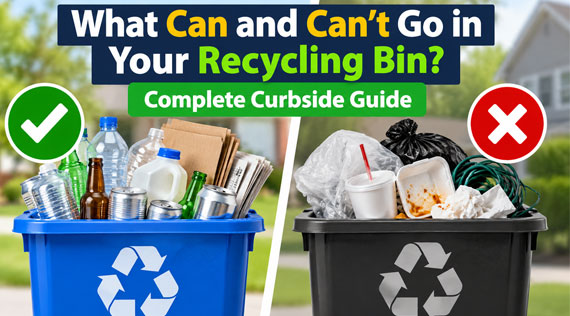
For a deeper explanation of what belongs in a household cart, see RecyclingMonster’s complete curbside recycling guide.
What Can and Can’t Go in Your Recycling Bin? Complete Curbside Guide
What Do Recycling Numbers 1–7 Mean? A Complete Plastic Recycling Guide
Items That Need Extra Safety Attention
Batteries
Batteries are not one uniform waste stream. Chemistry determines how they should be managed. The U.S. Environmental Protection Agency says lithium-ion, lithium metal, lead-acid and rechargeable batteries should not be placed in municipal garbage or recycling bins. Lithium batteries can retain enough energy to create a fire hazard even when they appear discharged.
EPA advises protecting battery terminals with non-conductive tape or placing individual batteries in separate plastic bags when appropriate. For local options, browse battery recycling centers.
Needles and Sharps
Used needles, syringes and lancets require their own disposal route. The U.S. Food and Drug Administration recommends placing used sharps immediately into an FDA-cleared sharps disposal container when possible. The sealed container should then be managed according to community rules.
Loose sharps should never be placed in a recycling bin. They can injure collection and sorting workers.
Paint, Cleaners and Pesticides
Leftover paint, cleaners, pesticides, solvents and similar products can fall under household hazardous waste rules depending on the product and local program. Follow label instructions and check the local household hazardous waste system before disposal.
RecyclingMonster maintains a directory of hazardous-material recycling and collection facilities, but always confirm the specific product and quantity accepted before arriving.
Refrigerators and Freezers
Refrigerated appliances require more than ordinary bulky-item disposal. EPA rules require refrigerant to be properly recovered before final disposal of equipment such as refrigerators and freezers.
Consumers can check retailer take-back, municipal bulky-item collection or an appliance recycler. Do not cut refrigerant lines or attempt to release refrigerant from the appliance.
What About Plastic? The Number Is Only Part of the Answer
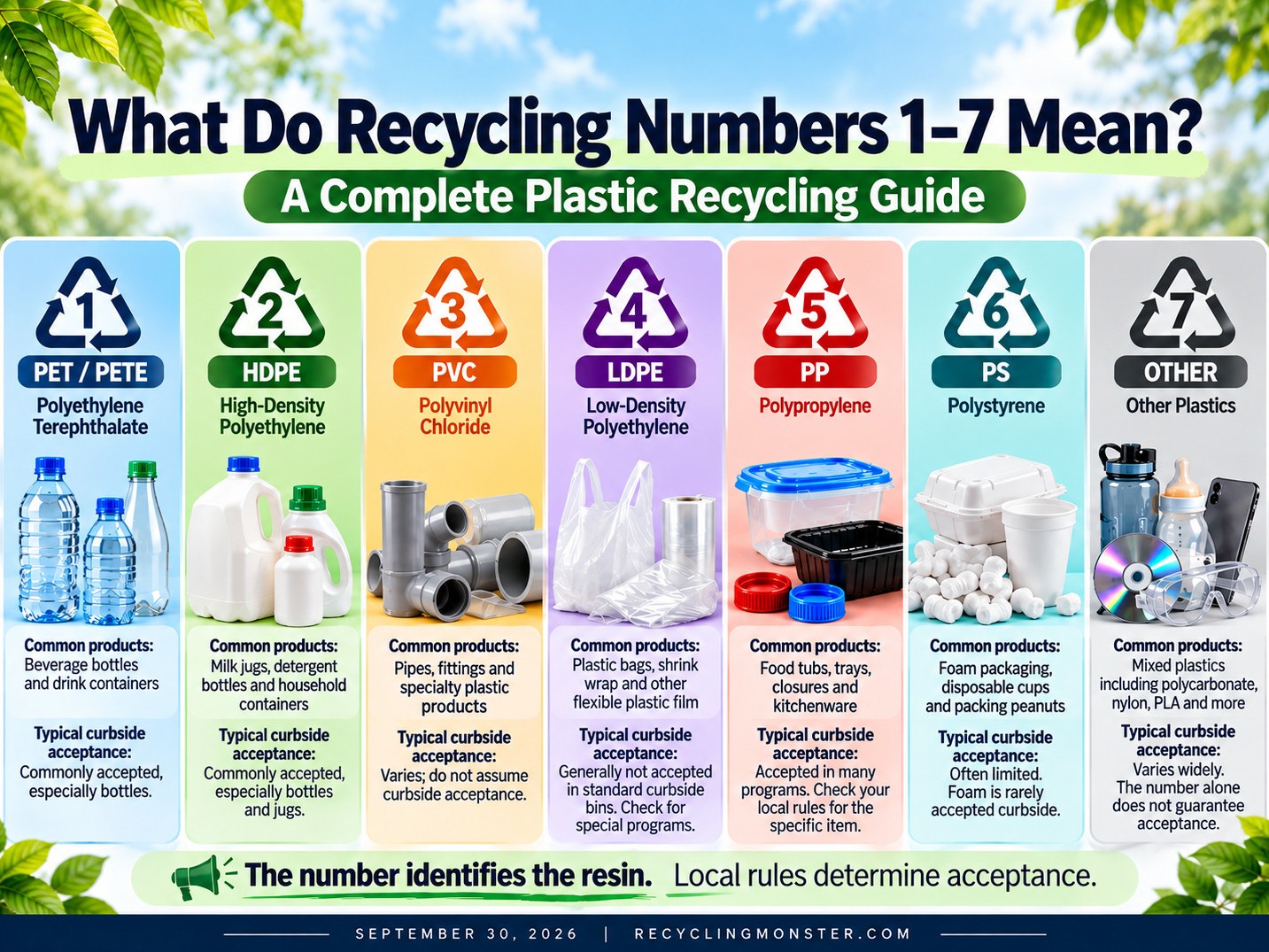
Plastic packaging causes some of the most persistent recycling confusion. A number inside the familiar triangular resin symbol identifies the plastic resin. It does not guarantee that a particular community accepts the item.
That distinction matters for bottles, tubs, cups, film and foam. A recycling program may accept a #1 PET bottle but reject another #1 package because its size, shape or construction does not work with the local collection and sorting system.
For a resin-by-resin explanation, see RecyclingMonster’s guide to plastic recycling numbers 1 through 7. If curbside collection does not accept the item, browse plastic recycling centers.
Paper and Cardboard: Clean, Dry and Program-Compatible
Newspapers, magazines, mail and flattened cardboard are among the materials most commonly accepted in recycling programs. Food contamination and product coatings can change the answer, however.
EPA says pizza boxes can be recycled even with some grease as long as food scraps are removed. Shredded paper is a local-rule item, while shiny or laminated gift wrap is often unsuitable for paper recycling.
For paper items that your local curbside program does not accept, browse paper recycling centers.
Food Scraps and Yard Waste Belong in the Organics Conversation
Food scraps and yard trimmings do not belong in a conventional recycling bin. They can, however, be recycled biologically through composting where an appropriate program exists.
EPA defines composting as the managed aerobic decomposition of organic materials such as food scraps, leaves, grass and yard trimmings. Households may be able to compost at home or participate in a community collection program.
RecyclingMonster’s organic waste recycling directory can help identify facilities and services that list food scraps, green waste or other organics.
How to Find the Right Recycling Option Near You
If the table says check local or special drop-off, do not stop at the curbside answer. The item may still have a practical recovery route.
Use RecyclingMonster’s Recycle an Item finder to search for a specific material and location. For broader searches, browse the recycling center directory or go directly to a material category:
- Household recycling centers
- Electronics recycling centers
- Battery recycling centers
- Hazardous-material recycling centers
- Plastic recycling centers
- Paper recycling centers
- Glass recycling centers
- Metal recycling centers
- Organic waste recycling centers
- Automotive recycling centers
Directory listings indicate materials and services reported for individual facilities. Contact the facility directly before traveling to confirm current acceptance, quantities, fees, residency rules and drop-off requirements.
Frequently Asked Questions
How do I know if something is recyclable where I live?
Check the accepted-material list from your municipality or hauler. If the item is not accepted curbside, search RecyclingMonster by material and location for a specialty recycler or drop-off option.
Should I put an item in the recycling bin if I am not sure?
No. Confirm the local rule first. Putting an unaccepted item into the bin can create contamination, sorting problems or safety hazards.
Can batteries go in the recycling bin?
Most batteries should not go in municipal recycling bins. Lithium-ion, lithium metal, lead-acid and rechargeable batteries require separate collection. Alkaline-battery rules differ, so check the battery chemistry and local guidance.
Can electronics go in curbside recycling?
No. EPA directs consumers to electronics collection sites, manufacturers, retailers or other dedicated recycling programs rather than standard curbside recycling.
What should I do when an item is recyclable but my city does not accept it?
Look for a retailer take-back program, specialty recycler, household hazardous waste program or material-specific drop-off facility. RecyclingMonster’s Recycle an Item finder can be used to search for local options.
Sources and Verification
This guide was checked against current primary federal guidance on October 2, 2026. Local collection rules remain the final authority for curbside acceptance.
- U.S. EPA: How Do I Recycle Common Recyclables?
- U.S. EPA: Used Household Batteries
- U.S. EPA: Household Hazardous Waste
- U.S. EPA: Managing, Reusing and Recycling Used Oil
- U.S. EPA: Appliance Disposal
- U.S. EPA: Composting at Home
- U.S. FDA: Proper Sharps Disposal
- U.S. FDA: Disposal of Unused Medicines
Last verified: October 2, 2026.