 By Anil
Mathews | Published on October 05, 2026 12:00:00 AM
By Anil
Mathews | Published on October 05, 2026 12:00:00 AM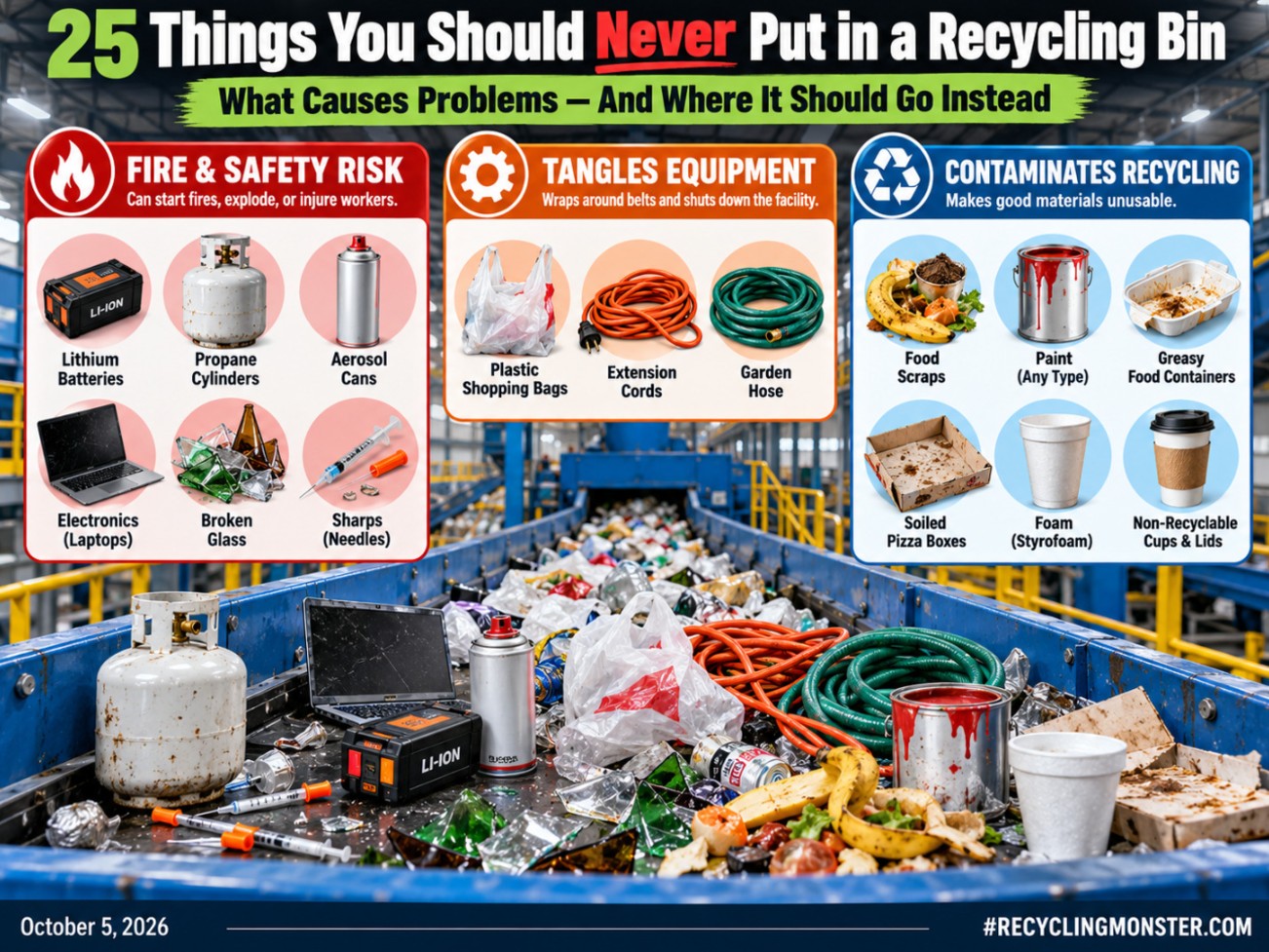
- Lithium-ion batteries and devices containing them can create fires when they are crushed or damaged during collection and sorting.
- Plastic bags, hoses, cords, rope and similar flexible items can wrap around recycling equipment and force facilities to stop production.
- Food, liquids, dirty diapers and other contamination can spoil otherwise marketable recyclable materials.
- Paint, pesticides, solvents, propane cylinders and other hazardous or pressurized products require separate handling.
- “Not curbside recyclable” does not necessarily mean “not recyclable.” Many problem items have specialty collection or drop-off options.
25 Items to Keep Out of Your Recycling Bin
The fastest way to avoid a recycling mistake is to ask two questions: Can the local sorting facility process this item? and could it create a safety, contamination or equipment problem?
The table below explains the most common problem items and gives you a better next step.
| # | Keep This Out | Main Problem | Why It Does Not Belong | Where It Should Go Instead |
|---|---|---|---|---|
| 1 | Plastic bags, film and wrap | Tangling | Loose flexible film can wrap around shafts, screens and other sorting equipment. | Reuse them or look for a retailer or specialty film-recycling program. Search the Recycle an Item finder for local options. |
| 2 | Recyclables tied inside plastic bags | Sorting problem | Many sorting facilities need recyclables loose so equipment and workers can identify and separate them. Bagged material may be treated as contamination. | Empty accepted recyclables loose into the cart. Manage the plastic bag separately. |
| 3 | Garden hoses | Tangling | Hoses can wrap around recycling machinery and cause shutdowns. | Reuse the hose if possible or check the RecyclingMonster material finder for specialty options. |
| 4 | Electrical cords and string lights | Tangling | Cords and holiday lights can become wrapped around sorting equipment even though the materials inside may have recycling value. | Use an electronics or specialty collection program. Browse electronics recycling centers. |
| 5 | Rope, twine and chains | Tangling | Long flexible items can catch in rotating equipment and require machinery to be stopped for removal. | Reuse where practical or check local specialty options through Recycle an Item. |
| 6 | Clothing, textiles and hangers | Tangling | Clothing and flexible textiles can wrap around machinery, while hangers can interfere with sorting equipment. | Donate usable items or use a textile or specialty collection program. Search RecyclingMonster by item and location. |
| 7 | Lithium-ion and lithium-metal batteries | Fire risk | Lithium batteries can be damaged or crushed during collection and processing, creating a fire hazard. | Take them to a dedicated battery collection location or appropriate household hazardous waste program. Browse battery recycling centers. |
| 8 | Rechargeable and other household batteries | Special handling | Rechargeable batteries such as Ni-Cd, Ni-MH, Ni-Zn and small sealed lead-acid batteries should not go into municipal recycling bins. | Use a battery collection site, retailer program or battery recycler. Check local instructions for alkaline batteries. |
| 9 | Electronics | Battery / equipment risk | Phones, tablets, laptops and other electronics do not belong in standard curbside recycling and may contain rechargeable batteries. | Use an electronics collection or take-back program. Find electronics recycling centers. |
| 10 | Propane tanks and gas cylinders | Pressurized container | Pressurized cylinders can create serious safety problems when compacted or processed with ordinary recyclables. | Use a propane supplier, cylinder exchange, household hazardous waste program or other approved collection route. Search hazardous-material facilities. |
| 11 | Unemptied aerosol cans | Pressure / HHW | EPA identifies aerosol cans that are not empty among household hazardous waste examples. | Use a local household hazardous waste program. Rules for completely empty aerosol cans vary, so confirm locally. |
| 12 | Paint and cans containing leftover paint | Household hazardous waste | Leftover paint requires separate management and should not be mixed with household recyclables. | Donate usable paint where accepted or use a paint-recycling or household hazardous waste program. Browse hazardous recycling facilities. |
| 13 | Pesticides, herbicides and insecticides | Household hazardous waste | These products may contain hazardous ingredients and require special disposal. | Follow the product label and use an approved household hazardous waste program. |
| 14 | Solvents, antifreeze, ammonia and other leftover household chemicals | Chemical hazard | Reactive, corrosive, flammable or toxic household products do not belong with ordinary curbside recyclables. | Keep products in their original containers and follow local household hazardous waste instructions. Search hazardous-material recycling and collection facilities. |
| 15 | Used motor oil and oily filters | Oil contamination | Used oil can contaminate other materials and requires a dedicated collection pathway. | Use a participating automotive business, used-oil collection point or appropriate recycler. Search the Recycle an Item finder. |
| 16 | Needles, syringes and other sharps | Worker injury risk | Loose sharps can injure collection and sorting workers. | Place used sharps in an appropriate sharps container and follow your local medical-sharps disposal program. Never place loose needles in recycling. |
| 17 | Broken glass | Injury risk | Glass shards can injure workers and create handling problems. | Follow your local waste authority's instructions for broken glass rather than placing it in the recycling bin. |
| 18 | Broken light bulbs, CFLs and fluorescent lamps | Breakage / mercury | Bulbs require special handling, and fluorescent lamps and CFLs contain small amounts of mercury. | Check a local bulb-recycling, retailer or household hazardous waste program. |
| 19 | Food scraps | Contamination | Food is not a conventional curbside recyclable and can contaminate paper and other recoverable materials. | Prevent food waste first, then use home composting or a local organics program where available. |
| 20 | Liquids | Contamination | Liquid left in bottles, cans and cartons can spill onto paper and other recyclables during collection and sorting. | Empty accepted containers before recycling them. |
| 21 | Food-soiled paper, napkins and paper towels | Fiber contamination | Heavily food-soiled paper and absorbent paper products are generally unsuitable for conventional paper recycling. | Compost them where an organics program accepts them or use the appropriate waste stream. Pizza boxes are a separate case: many programs accept them after food scraps are removed. |
| 22 | Dirty diapers and pet waste | Sanitary contamination | These materials contaminate the recycling stream and create unacceptable exposure for recycling workers. | Use the appropriate household trash or local waste-management route. |
| 23 | Plastic utensils | Not conventional curbside | EPA states that plastic utensils cannot be recycled through conventional household recycling. | Reuse durable utensils where practical or follow local disposal guidance. |
| 24 | Compostable plastics | Plastic-stream contamination | Compostable plastics are not intended for conventional plastics recycling and can disrupt the recycling stream. | Use a commercial or municipal composting program only if it specifically accepts the product. |
| 25 | Polystyrene foam / Styrofoam packaging | Limited curbside acceptance | EPA notes that very few localities accept polystyrene foam in curbside recycling. | Keep it out of the standard recycling bin unless your local program explicitly accepts it. Look for specialty recycling through Recycle an Item. |
Why Plastic Bags, Hoses and Cords Cause So Much Trouble
Recycling facilities are designed to separate relatively rigid materials such as paper, cardboard, containers and cans. Long, flexible materials behave differently.
Plastic film, electrical cords, holiday lights, hoses, rope, chains and textiles can wrap around moving equipment. Recycling operators often refer to these materials as tanglers.
When a tangler becomes caught around a shaft or sorting screen, equipment may need to be stopped so workers can remove it. That slows processing and can expose employees to unnecessary risk.
Portland's Bureau of Planning and Sustainability, for example, specifically warns residents to keep plastic bags, rope, cords and clothing out of curbside recycling because the materials can wrap around recycling equipment.
Batteries Are a Different Kind of Recycling Hazard
Batteries are not merely a contamination problem. Some are a direct fire hazard.
The U.S. Environmental Protection Agency says lithium-ion batteries and devices containing them should not be placed in household trash or municipal recycling bins. A battery can be crushed or damaged in a collection vehicle or sorting facility, creating the conditions for a fire.
This applies to far more than phones and laptops. Lithium-ion batteries can be found in power tools, toys, tablets, e-readers, cordless appliances, cameras and many other rechargeable products.
EPA recommends taking lithium-ion batteries to a dedicated collection location or appropriate household hazardous waste program. Battery terminals should be protected according to collection-program instructions, commonly by using non-conductive tape or individually bagging batteries.
Use RecyclingMonster's battery recycling directory to search for facilities, then confirm that the location accepts your specific battery chemistry before visiting.
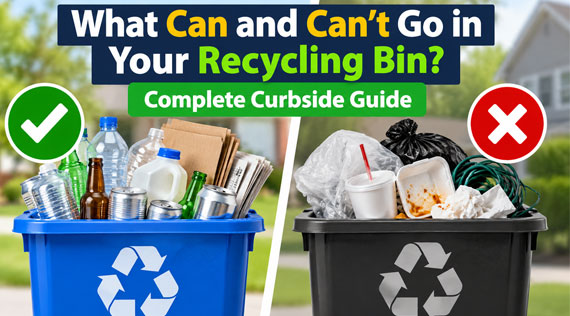
What Can and Can’t Go in Your Recycling Bin? Complete Curbside Guide
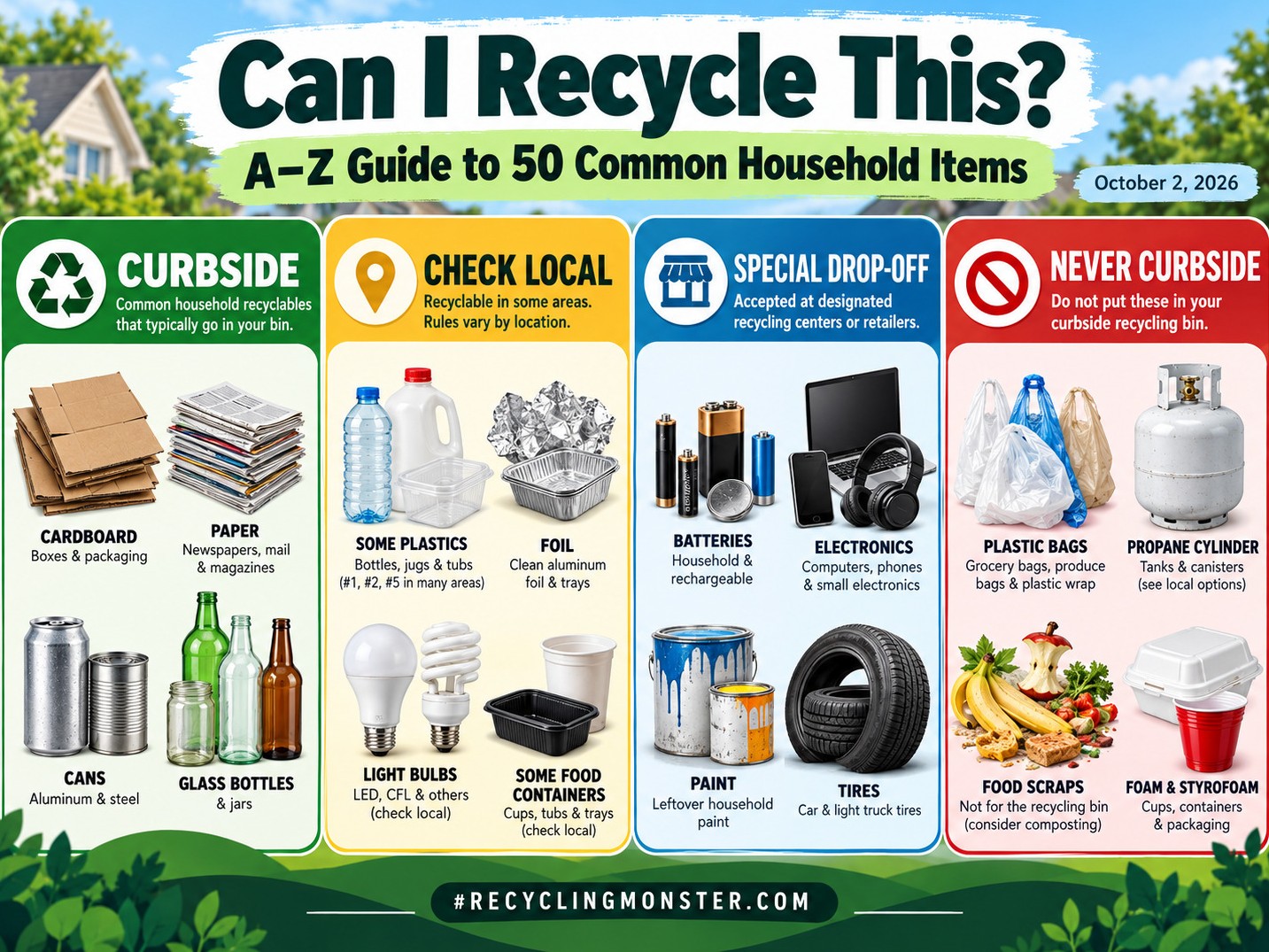
Can I Recycle This? A–Z Guide to 50 Common Household Items
Hazardous Products Need Their Own Collection Route
Paint, pesticides, solvents, antifreeze, unemptied aerosol cans and other chemical products should not be mixed with normal household recyclables.
EPA classifies many leftover household products as household hazardous waste when they can catch fire, react, explode, corrode materials or contain toxic ingredients. The correct disposal route varies by product and by state or local program.
Do not combine chemicals, pour them into drains or transfer them into unmarked containers simply to get rid of them. Keep the original label whenever possible and follow the manufacturer's directions and local household hazardous waste requirements.
For collection options, browse RecyclingMonster's hazardous recycling and collection facilities.
Food and Liquids Can Ruin Good Recyclables
Recycling does not require containers to look unused, but accepted containers should generally be empty and reasonably free of food residue.
Liquids can leak during collection and contaminate paper and cardboard. Food scraps create the same problem and should be managed separately from conventional recyclables.
Where a local organics program exists, food scraps may have a composting route. EPA describes composting as the managed biological decomposition of organic materials such as food scraps, leaves and yard trimmings.
One important exception to overly broad “no food-soiled paper” advice is the pizza box. EPA says pizza boxes can be recycled even with some grease as long as leftover food is removed. Always check the local program because collection rules still differ.
“Not in the Bin” Does Not Mean “Throw It Away”
Many of the materials on this list have value. They simply do not belong in the same collection stream as bottles, cans, paper and cardboard.
Electronics contain metals and other components that can be recovered through dedicated electronics recyclers. Batteries require specialized processing. Plastic film may have a retailer collection option. Used oil has its own recovery network. Clothing may be reused, donated or collected separately.
This distinction matters: curbside recyclability and recyclability are not the same thing.
If your municipality does not accept an item in the recycling cart, use RecyclingMonster's Recycle an Item finder to search by material and location or browse household recycling centers.
The Simple Rule That Prevents Most Recycling Mistakes
If an item is not specifically accepted by your local recycling program, do not put it in the bin just because it contains plastic, metal, paper or glass.
A recycling symbol does not override local collection rules. Neither does the fact that a material can theoretically be recycled somewhere.
Before throwing an unfamiliar item into the cart:
- Check the local accepted-material list.
- Identify whether the item contains a battery, chemical, liquid or pressurized component.
- Ask whether it could wrap around machinery or injure a worker.
- Find a specialty recycling route when curbside is not appropriate.
The objective is not to put more things into the recycling bin. It is to put the right things into the recycling bin and send everything else to the correct recovery, reuse or disposal system.
Frequently Asked Questions
What are the worst things to put in a recycling bin?
Lithium batteries, propane cylinders, loose sharps, hazardous chemicals and tanglers such as plastic bags, hoses and cords create some of the most serious safety or equipment risks. Keep them out of standard curbside recycling.
Can plastic bags go in curbside recycling?
Generally, no. Plastic bags and film can wrap around sorting equipment. Some retailers and specialty programs collect clean bags and film separately.
Why can't lithium batteries go in recycling bins?
They can be damaged or crushed in collection and processing equipment and create fires. EPA recommends separate battery or household hazardous waste collection.
Can electronics go in the recycling bin?
No. Phones, computers, tablets and other electronics should use an electronics recycling or take-back program rather than standard curbside recycling.
What should I do if I am not sure whether an item is recyclable?
Do not guess. Check your municipality or hauler's current accepted-material list, then use RecyclingMonster's Recycle an Item finder if the material needs a specialty recycling route.
Sources and Verification
This guide was checked against current federal and local-government recycling guidance on October 5, 2026. Local curbside programs remain the final authority for what belongs in a specific recycling cart.
- U.S. EPA: How Do I Recycle Common Recyclables?
- U.S. EPA: Frequent Questions on Recycling
- U.S. EPA: Used Household Batteries
- U.S. EPA: Used Lithium-Ion Batteries
- U.S. EPA: Household Hazardous Waste
- City of Portland: Why “Tanglers” Should Never Go in Your Recycling Bin
- Washington State Department of Ecology: Recycle Right
Last verified: October 5, 2026.