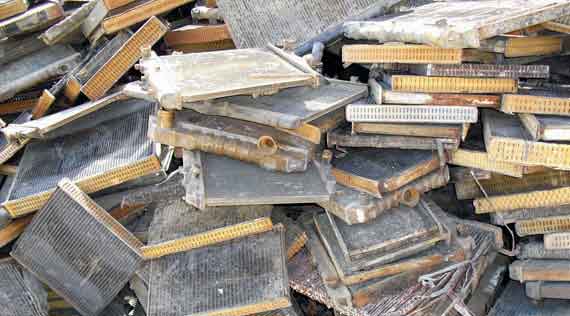
Copper/Aluminum Radiator Ends Scrap consists of end sections removed from copper-tube and aluminum-fin heat exchangers during recycling preparation. Also called Cu/Al Radiator Ends, Al/Cu Radiator Cutoffs or ACR Ends, these assemblies commonly contain steel or iron plates together with copper tube bends, residual aluminum fins and other attached materials.
Radiator ends are generally purchased separately from clean copper/aluminum radiator cores because their mixed-metal composition requires additional processing. Their scrap value depends on recoverable copper, aluminum and ferrous-metal content, contamination, preparation and the receiving buyer's requirements.
Copper/Aluminum Radiator Ends: Quick Facts
- Material category: Mixed ferrous and nonferrous radiator scrap
- Common names: Cu/Al Radiator Ends, Al/Cu Radiator Ends, ACR Ends and Radiator Cutoffs
- Typical components: Steel end plates, copper tubing and residual aluminum
- Common copper form: U-shaped tube bends and cut tube ends
- Related clean-core specification: ReMA/ISRI Talk
- Official Radiator Ends code: No dedicated ReMA/ISRI code confirmed
- Related dirty grade: Copper/Aluminum Radiators /Fe
- Primary sources: HVAC, refrigeration and heat-exchanger recycling
- Key identification: Steel plates, exposed copper tubing and source material
- Important pricing factors: Metal recovery, contamination, preparation, quantity and location
- Potential buyers: Nonferrous scrap yards, radiator processors and HVAC equipment recyclers
What Are Copper/Aluminum Radiator Ends?
Copper/Aluminum Radiator Ends are the portions cut from aluminum-fin and copper-tube heat exchangers when the main core is being prepared for recycling.
Many heat exchangers have structural or mounting components at their ends. These may support copper tubing, hold the fin pack in place or provide connections for the equipment.
When the radiator is prepared for sale as clean aluminum/copper scrap, steel-bearing end assemblies may need to be removed.
The separated pieces become a distinct mixed-metal stream commonly called Cu/Al Radiator Ends.
What Materials Are Found in Radiator Ends?
Depending on their construction, radiator ends may contain:
- Steel or iron header plates
- Copper tube bends and cut tube sections
- Residual aluminum fins
- Steel mounting brackets and supports
- Bolts, screws and other fasteners
- Solder or brazing material
- Plastic or rubber attachments
- Other materials associated with the original heat exchanger
Important: There is no universal metal composition for all radiator ends. Different heat-exchanger designs produce different combinations of copper, aluminum and steel.
Where Do Copper/Aluminum Radiator Ends Come From?
Radiator ends are most commonly generated when copper/aluminum heat exchangers are removed and prepared for metal recycling.
These heat exchangers can originate from:
- Residential air-conditioning systems
- Commercial HVAC equipment
- Heat pumps
- Refrigeration condensers
- Evaporator coils
- Walk-in coolers and freezers
- Refrigerated display equipment
- Industrial cooling systems
- Specialized liquid-to-air heat exchangers
Not every coil uses copper tubes and aluminum fins. Some modern heat exchangers are manufactured entirely from aluminum or have other constructions.
Confirm the original material before classifying the cut-off ends.
What Is an Aluminum/Copper Radiator?
An Aluminum/Copper Radiator is a heat exchanger commonly constructed from copper tubing passing through closely spaced aluminum fins.
The tubing carries refrigerant, coolant or another heat-transfer fluid while the aluminum fins increase the surface area available for heat exchange with surrounding air.
In scrap trading, this material is often called:
- Al/Cu Radiators
- Cu/Al Radiators
- ACR Scrap
- Air-Conditioning Coils
- Aluminum Copper Radiators
- Copper/Aluminum Heat Exchangers
Scrap yards generally distinguish the clean copper/aluminum core from assemblies still containing substantial iron, steel or other foreign attachments.
See RecyclingMonster's Copper/Aluminum Radiator Scrap Guide for the related clean-core material.
Are Copper/Aluminum Radiator Ends an Official ReMA Grade?
No dedicated ReMA/ISRI commodity code named Copper/Aluminum Radiator Ends has been confirmed.
The Recycled Materials Association (ReMA) maintains an official specification called Talk: Aluminum Copper Radiators.
Talk applies to clean aluminum-and-copper radiator material, including aluminum fins on copper tubing.
It requires material to be free of:
- Brass tubing
- Iron
- Other foreign contamination
Radiator ends containing steel or iron do not meet that clean-core specification as received.
Scrap yards may nevertheless purchase the removed ends under a separate commercial category.
Trade specification note: The composition, permitted contamination and buying price for Cu/Al Radiator Ends are established by the receiving buyer rather than a universal ReMA Radiator Ends specification.
Why Are the Ends Removed From Copper/Aluminum Radiators?
Radiator ends are commonly removed to reduce ferrous contamination and increase the concentration of recoverable copper and aluminum in the remaining heat-exchanger core.
The preparation can produce two material streams:
- Clean Al/Cu Radiator Core: Copper tubing and aluminum fins, with prohibited foreign attachments removed.
- Cu/Al Radiator Ends: The separated end sections containing steel, copper tube bends and other material.
Cleaning can allow the remaining core to be evaluated under a higher-grade radiator purchasing category.
However, the seller must consider the weight removed, the value of the cutoffs and the cost of preparation before assuming that dismantling is more profitable.
Clean Al/Cu Radiators vs. Cu/Al Radiator Ends
The principal differences are material composition, preparation and purchasing grade.
Clean cores commonly have a higher price per pound because more of their total weight consists of the desired copper and aluminum.
Radiator ends often receive a lower price per pound because of their steel and other foreign materials.
The actual difference depends on buyer quotations, metal recovery and contamination.
Cu/Al Radiator Ends vs. Cu/Al Radiators /Fe
Cu/Al Radiators /Fe and Cu/Al Radiator Ends are related but different scrap products.
Cu/Al Radiators /Fe generally refers to a complete aluminum/copper radiator that still contains iron or steel attachments.
Cu/Al Radiator Ends refers to the material removed when those attachments are cut from the main radiator core.
A seller may have three commercial options:
- Sell the complete heat exchanger under an /Fe or dirty radiator grade.
- Remove the ends and sell the clean radiator core separately.
- Sell the removed ends under an accepted Radiator Ends grade.
The preferred approach depends on local prices, processing costs and the buyer's requirements.
See Copper/Aluminum Radiators /Fe Scrap for the companion guide on steel-bearing complete radiators.
What Does /Fe Mean in Radiator Scrap?
Fe is the chemical symbol for iron.
In metal recycling, /Fe commonly identifies a scrap material that has iron or steel attached to an otherwise nonferrous assembly.
For copper/aluminum radiators, this often means that steel end plates, frames or brackets are still present.
The /Fe designation helps distinguish those complete assemblies from clean Talk-grade radiator cores.
It is not a statement that all /Fe radiator material contains an identical percentage of iron.
Do Cu/Al Radiator Ends Contain 52% Copper and 45% Aluminum?
No universal 52% copper and 45% aluminum specification applies to Copper/Aluminum Radiator Ends.
These percentages appear in some older material descriptions, but they are not confirmed requirements of the current ReMA Talk specification.
Actual radiator ends can contain substantial steel or iron, copper tube sections, residual aluminum and smaller quantities of other materials.
The composition varies according to:
- Heat-exchanger manufacturer
- Coil design
- Thickness and construction of the end plates
- Number and dimensions of copper tube bends
- Amount of aluminum left attached
- Location of the separation cuts
- Remaining mounting hardware
- Other foreign contamination
For industrial purchases, use actual material inspection, recovery results or a buyer-approved specification rather than a fixed copper/aluminum percentage.
Are There Official 0.3% Tin and 3% Iron Limits?
The current ReMA Talk specification does not establish a dedicated Radiator Ends grade with universal limits of 0.3% tin and 3% alloyed iron.
Those percentages should not be presented as current official requirements for all radiator ends.
Individual scrap buyers may establish limits for tin, iron or other materials as part of their own purchasing contracts.
Commercial guidance: Request the buyer's current written specification before preparing or shipping a large quantity of radiator ends.
How to Identify Copper/Aluminum Radiator Ends
Cu/Al Radiator Ends can often be recognized by their source and their combination of rigid metal plates and copper tubing.
Common identification features include:
- Flat or formed steel end plates
- Multiple copper tubes passing through a metal plate
- U-shaped copper tube bends
- Traces of aluminum-fin material
- Steel brackets and mounting hardware
- Magnetic response from ferrous components
Recommended Identification Steps
- Confirm the source: Identify the original copper/aluminum heat exchanger.
- Inspect the tubing: Look for copper tube ends and bends.
- Check the plates: Identify steel or iron mounting sections.
- Use magnetic screening: Locate ordinary ferrous components.
- Inspect aluminum residue: Note any fins still attached to the cutoff.
- Check foreign materials: Identify solder, brazing, plastic, rubber or unrelated hardware.
- Confirm safe processing: Ensure the equipment has been made safe before cutting or further dismantling.
- Verify the buyer's grade: Determine whether the material qualifies as Radiator Ends or another mixed-metal grade.
Identification warning: Visual inspection and magnets cannot determine the precise chemical composition or recovery yield of a mixed radiator-end shipment.
Are Copper/Aluminum Radiator Ends Magnetic?
Many radiator ends contain steel or iron and will therefore respond to a conventional magnet.
Copper and aluminum themselves are nonferrous and do not normally respond strongly to a standard magnet.
A magnetic response can help identify the steel portion of an end assembly.
However, not every radiator end has the same construction, and magnetic screening does not establish total metal composition or commercial grade.
Should You Cut the Ends Off an Al/Cu Radiator?
Sometimes, but not automatically.
Removing the steel-bearing ends can allow the remaining radiator core to meet a cleaner purchasing grade.
But the additional preparation also removes weight from the main material and can introduce labor and equipment costs.
Before Cutting, Compare These Factors
- Current clean Al/Cu radiator price
- Current /Fe or dirty radiator price
- Expected clean-core weight
- Weight of the removed radiator ends
- Price offered for radiator ends
- Labor and equipment requirements
- Handling and transportation costs
For large commercial loads, a representative batch can help establish actual recovered weights before committing to full-scale preparation.
Decision principle: Compare the total net return, not only the per-pound difference between clean and dirty radiator grades.
How to Calculate the Value of Removing Radiator Ends
A simple comparison helps determine whether additional preparation is justified.
Option A: Sell the Complete Dirty Radiator
Revenue = Complete radiator weight × Accepted /Fe buying price.
Option B: Sell the Prepared Materials Separately
Gross revenue = Clean-core weight × Clean-core buying price + Radiator-ends weight × Ends buying price.
Prepared net return = Gross revenue minus additional cutting, handling, transport and processing costs.
Decision: If the prepared net return exceeds the complete-radiator revenue, the separation may be commercially worthwhile.
This calculation must use actual buyer quotations and realistic recovered weights. A higher price per pound for clean cores does not guarantee a higher total selling return.
Can Copper Tubes Be Removed From Radiator Ends?
Yes. Copper tube sections may be recovered from radiator ends through appropriate mechanical separation.
However, the removed copper may contain:
- Solder or brazing filler
- Residual steel attachments
- Aluminum-fin material
- Oxidation and surface contamination
- Other materials from the original assembly
Recovered tube pieces should not automatically be classified as #1 Copper or Bare Bright Copper.
They must be evaluated according to the receiving buyer's copper-grade requirements.
For large volumes, specialized processors may use industrial size reduction and separation rather than manually removing individual tube bends.
Is Copper Recovered From Radiator Ends #1 or #2 Copper?
Not automatically.
The accepted grade depends on copper purity, coatings, attached materials, solder, brazing filler and other contamination.
Clean copper tubing may qualify for a higher copper grade if it meets the appropriate requirements.
Contaminated or heavily soldered tubing may require a lower or specially negotiated grade.
RecyclingMonster's Copper Scrap Prices page provides general copper market context, but those quotations are not direct prices for mixed radiator ends.
Cu/Al Radiator Ends vs. Copper/Brass Radiator Scrap
Copper/Aluminum Radiator Ends and Copper/Brass Radiator material should be kept separate.
Al/Cu heat exchangers commonly contain copper tubing and aluminum fins.
Copper/Brass radiators have a different metal composition and may use copper and brass components.
Mixing the two can affect the recoverable-metal composition and accepted commercial grade.
During bulk sorting, identify the original heat-exchanger construction rather than assuming that all radiator cutoffs contain the same metals.
Cu/Al Radiator Ends vs. All-Aluminum Radiator Scrap
All-aluminum radiators and condensers are a separate material stream.
ReMA maintains a specification called Tally for clean all-aluminum automobile radiators and condensers.
That specification differs from Talk, which covers qualifying aluminum/copper radiator material.
Do not classify an all-aluminum heat exchanger as a Copper/Aluminum Radiator simply because the fins have a similar appearance.
See Aluminum Radiators for a related but distinct scrap-material category.
What Affects Copper/Aluminum Radiator Ends Scrap Prices?
Cu/Al Radiator Ends Scrap prices depend on the value and quantity of recoverable metals, the amount of contamination and the receiving processor's requirements.
Principal Pricing Factors
- Copper content: Recoverable copper tube bends and sections
- Aluminum content: Recoverable residual aluminum-fin material
- Iron and steel: Quantity of ferrous plates, frames and attachments
- Contamination: Plastic, rubber, dirt and other unwanted materials
- Joining materials: Solder and brazing filler
- Preparation: Complete cutoffs versus separately processed metals
- Material consistency: Similar heat-exchanger construction throughout a load
- Quantity: Shipment weight and commercial scale
- Market conditions: Copper, aluminum and ferrous-metal demand
- Location: Transportation and processing availability
- Buyer specification: Accepted composition and settlement terms
Available Copper/Aluminum Radiator Ends Prices
Review RecyclingMonster's available material-specific price records below.
Confirm that the price is explicitly identified as Cu/Al Radiator Ends or an equivalent accepted radiator-end grade, rather than a clean radiator or complete /Fe radiator.
Always check the reporting date, location, currency and weight unit before comparing prices.
The prices listed below are country averages paid by recycling centers in the United States
| Scrap Material | National Average | High Price | Low Price | Unit | Updated |
|---|---|---|---|---|---|
| Unclean Cu/Brass Radiator Scrap | $1.19 | 1.19 | 1.18 | USD/LB | 2020-04-07 |
| Cu/Al Radiators Scrap | $1.8 | 1.8 | 1.8 | USD/LB | 2019-12-09 |
| Cu/Al Radiators /Fe Scrap | $1.46 | 1.46 | 1.46 | USD/LB | 2019-12-09 |
| Cu/Al Radiator Ends Scrap | $0.63 | 0.63 | 0.63 | USD/LB | 2018-09-26 |
| Cu/Brass Radiator Scrap | $15.66 | 15.66 | 15.65 | USD/LB | 2018-03-07 |
For broader market references, visit Copper Scrap Prices and Aluminum Scrap Prices.
General metal prices are not substitutes for material-specific radiator-end quotations.
Are Radiator Ends Worth Less Than Clean Al/Cu Radiators?
Radiator ends commonly receive a lower purchasing price per pound than clean copper/aluminum radiator cores.
They often contain a greater proportion of steel and other attached materials relative to their recoverable copper and aluminum.
However, there is no universal fixed discount between clean radiator scrap and radiator ends.
The actual price spread varies with metal composition, market conditions, location and the buyer's commercial grade definitions.
Prices from different reporting dates or locations should not be compared as though they are simultaneous offers.
Safe Handling of HVAC Radiator Ends
HVAC and refrigeration heat exchangers may contain refrigerant or other working fluids before proper equipment decommissioning.
In the United States, EPA Section 608 establishes refrigerant-management and safe-disposal requirements for covered stationary refrigeration and air-conditioning equipment.
Central air-conditioning systems, commercial refrigeration equipment and chillers are among the systems subject to applicable recovery requirements when dismantled on-site.
Different safe-disposal requirements apply to certain appliances entering the waste stream intact.
Critical safety rule: Do not cut copper tubing, open a refrigerant circuit or remove heat-exchanger ends from equipment that may still contain pressurized refrigerant.
Have the required refrigerant recovery and safe-decommissioning procedures completed before mechanical processing.
In Canada, operators must follow the applicable federal, provincial and territorial refrigerant-management requirements.
Mechanical Safety When Cutting Radiator Ends
Radiator-end preparation may involve sharp aluminum fins, cut copper tubing, steel plates and mechanical cutting equipment.
Workplace procedures should address:
- Sharp metal edges and cut hazards
- Unstable or heavy heat-exchanger assemblies
- Mechanical cutting and pinch points
- Suitable clamping and material support
- Eye, hand and other appropriate protection
- Proper handling and collection of cutoffs
- Safe loading, stacking and transportation
Do not use uncontrolled torch cutting, burning or other methods that can release harmful fumes or create additional processing hazards.
Large-scale preparation should be performed using suitable equipment and trained personnel.
How to Sort and Prepare Copper/Aluminum Radiator Ends
Proper preparation focuses on maintaining clear separation between clean radiator cores, dirty complete radiators and mixed cut-off ends.
- Verify equipment safety: Ensure required refrigerant recovery and safe decommissioning have been completed.
- Identify the radiator type: Distinguish Al/Cu from all-aluminum and copper/brass heat exchangers.
- Assess the buying grade: Confirm whether the buyer accepts clean cores, /Fe radiators and separated ends.
- Evaluate cutting economics: Compare preparation costs and expected metal recovery.
- Remove prohibited attachments: Address plastic, rubber and unrelated debris where required.
- Keep cutoffs separate: Do not mix radiator ends back into prepared clean Al/Cu cores.
- Use magnetic screening: Identify ordinary steel and iron components.
- Confirm dimensions: Check the buyer's requirements for loose ends, cut lengths and packaging.
- Record shipment weights: Keep separate measurements for clean cores and radiator ends where practical.
- Verify commercial terms: Confirm grades, deductions, pickup and payment before delivery.
For regular industrial processing, keeping separate containers for each radiator grade can improve consistency and reduce unnecessary material mixing.
How Are Copper/Aluminum Radiator Ends Recycled?
Qualified metal processors can recover copper, aluminum and ferrous metals from suitable radiator-end scrap.
A professional recovery process may include:
- Receiving and inspection: Material is weighed and assigned to the correct purchasing grade.
- Safety verification: Any applicable refrigerant-management requirements are confirmed.
- Contamination assessment: Plastic, rubber, debris and other foreign materials are identified.
- Mechanical preparation: Mixed end sections are sized or separated using suitable industrial equipment.
- Ferrous separation: Steel and iron are recovered where practical.
- Nonferrous recovery: Copper-rich and aluminum-rich materials are separated.
- Material quality checks: Recovered metal fractions are evaluated for downstream suitability.
- Secondary-metal processing: Accepted materials enter appropriate recycling streams.
- Manufacturing: Recovered metals may provide feedstock for new industrial products.
Not every scrap yard performs all recovery stages on-site. Some yards aggregate radiator ends and send them to specialized processors.
Where Can You Sell Copper/Aluminum Radiator Ends?
Cu/Al Radiator Ends may be purchased by nonferrous scrap yards, HVAC equipment recyclers, radiator processors and specialized mixed-metal recovery companies.
However, not every facility purchases radiator ends under a dedicated grade.
Copper/Aluminum Radiator Ends: Prices & Recycling - Material Specifications, How to Sell & Current Price accepting recycling centers in the United States
- Dabal & Sons Scrap MetalDabal & Sons Scrap Metal
246 Division Ave
Garfield,New Jersey - Absolute Auto245 Mountain Ave
Middlesex,New Jersey - Gerdau Metallics Raw Materials 1510 10th Street SE
Jamestown,North Dakota - Gerdau Metallics Raw Materials 314 Dawson Road North
Winnipeg,Manitoba - Gerdau Metallics Raw Materials 766 Ohio Street
Buffalo,New York
RecyclingMonster's Recycle an Item directory includes the Cu-Al Radiator Ends material category.
The AL/CU Radiators Recycling Centers Directory lists facilities associated with related radiator material.
You can also browse Clean Aluminum Copper Radiator Recycling Centers and Metal Recycling Centers.
Buyer verification: A directory listing does not guarantee that a facility currently purchases Cu/Al Radiator Ends. Confirm material acceptance, contamination limits, preparation requirements and price directly with the buyer.
Bulk Copper/Aluminum Radiator Ends: Commercial Requirements
HVAC contractors, refrigeration companies, appliance recyclers, demolition businesses and radiator processors can generate significant quantities of radiator ends during regular heat-exchanger preparation.
For bulk shipments or recurring supply agreements, buyers and sellers should confirm:
- Accepted Cu/Al Radiator Ends purchasing grade
- Required metal composition and preparation
- Permitted iron or steel content
- Restrictions on solder and brazing materials
- Permitted plastic and rubber attachments
- Clean-core versus /Fe radiator classifications
- Separate payment for radiator ends
- Accepted dimensions and particle sizes
- Minimum shipment quantities
- Gaylord, pallet and container availability
- Refrigerant recovery documentation where applicable
- Loading and collection responsibilities
- Delivered versus collected prices
- Sampling and inspection procedures
- Grade adjustments and rejection conditions
- Weight verification and processing deductions
- Freight and handling charges
- Payment and settlement terms
Keeping prepared clean cores and radiator ends in separate identifiable containers can help buyers evaluate each material accurately.
Collection services, free pickup and dedicated end-section prices depend on the individual recycler's arrangements.
Frequently Asked Questions About Copper/Aluminum Radiator Ends
What are Copper/Aluminum Radiator Ends?
They are the mixed-metal end sections cut from aluminum-fin and copper-tube heat exchangers. They commonly contain steel plates, copper tube bends and residual aluminum.
Are Cu/Al Radiator Ends an official ReMA grade?
No dedicated ReMA Radiator Ends code has been confirmed. ReMA Talk applies to qualifying clean aluminum/copper radiator cores, while ends are purchased under buyer-specific grades.
Are Copper/Aluminum Radiator Ends magnetic?
Many are partly magnetic because of attached iron or steel. Their copper and aluminum components do not normally respond strongly to an ordinary magnet.
Is removing radiator ends always more profitable?
No. Compare the dirty radiator price with the combined value of clean cores and separated ends, minus labor and processing costs.
Where can I sell Cu/Al Radiator Ends?
Some nonferrous scrap yards, radiator processors and HVAC recyclers purchase them. Confirm accepted grade, material condition and current pricing before delivery.
Explore More Copper and Aluminum Radiator Recycling Resources
Compare related heat-exchanger scrap grades, review published prices and find potential recycling buyers through RecyclingMonster.
- Clean Copper/Aluminum Radiator Scrap Guide
- Copper/Aluminum Radiators /Fe Scrap Guide
- Aluminum Radiators Material Guide
- Copper Scrap Prices
- Aluminum Scrap Prices
- Scrap Metal Price Database
- AL/CU Radiators Recycling Centers
- Clean Aluminum Copper Radiator Recycling Centers
- Find a Recycler by Material
- Metal Recycling Centers and Scrap Yards
- Nonferrous Metal Sorting Industry News
- Scrap Materials and Specifications Guide
- Recycling Industry News and Articles
- RecyclingMonster Homepage
Material information and safety notice: Copper/Aluminum Radiator Ends composition, scrap grades, prices and recycler acceptance vary by source, material condition, buyer, location and reporting date. ReMA Talk specifies clean aluminum/copper radiator material rather than a separate radiator-ends commodity. Refrigeration equipment may contain pressurized refrigerant requiring regulated handling before dismantling. Final grading and purchasing terms depend on the receiving buyer.