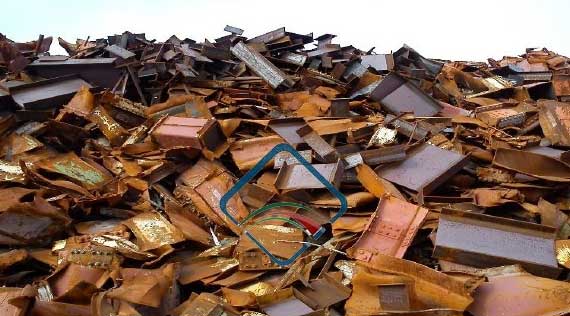
#2 Heavy Melting Scrap (#2 HMS) is a widely traded ferrous scrap grade consisting of prepared wrought iron and steel that does not meet the heavier requirements of #1 HMS.
The grade can include black and galvanized steel and is commonly recovered from demolition projects, automobiles, machinery, industrial equipment and scrap-processing operations.
What Is #2 Heavy Melting Scrap?
Under current ReMA ferrous scrap specifications, No. 2 Heavy Melting Steel, Code 203, consists of black and galvanized wrought iron and steel that is at least 1/8 inch thick.
The material must be prepared to charging-box size and processed so it can be charged compactly into a furnace.
#2 HMS includes steel that is not suitable for classification as No. 1 Heavy Melting Steel because of thickness, coatings, preparation or other grade requirements.
What Are the Main #2 HMS Specifications?
ReMA recognizes several #2 Heavy Melting Steel preparations:
- No. 2 HMS, Code 203: Black and galvanized wrought iron and steel at least 1/8 inch thick, prepared to charging-box size.
- No. 2 HMS, Code 204: Maximum size 36 × 18 inches and may include properly prepared automobile scrap.
- No. 2 HMS 3 Feet × 18 Inches, Code 205: Maximum size 36 × 18 inches; may include properly prepared automobile scrap but must be free of sheet iron and thin-gauge material.
- No. 2 HMS 5 Feet × 18 Inches, Code 206: Maximum size 60 × 18 inches; may include properly prepared automobile scrap but must be free of sheet iron and thin-gauge material.
Because several commercial preparations exist, sellers should confirm the exact #2 HMS specification required by the receiving scrap yard, processor or steel mill before cutting or loading material.
How to Identify #2 HMS
#2 HMS is generally heavier than light iron and sheet scrap but may include thinner steel than #1 HMS.
Typical characteristics include:
- Wrought iron or steel at least 1/8 inch thick
- Black steel
- Galvanized steel
- Prepared structural or industrial steel
- Properly prepared automobile scrap under certain specifications
- Pieces cut or prepared for furnace charging
- Minimal dirt, nonferrous metal and foreign material
A magnet can help confirm that the material is ferrous, but thickness, preparation and dimensions must also be considered before classifying a load as #2 HMS.
Common Sources of #2 Heavy Melting Scrap
#2 HMS can come from a wide range of industrial, demolition and automotive sources.
Common examples include:
- Building and structural demolition
- Automobile dismantling
- Industrial machinery and equipment
- Farm and heavy equipment
- Fabrication and manufacturing scrap
- Galvanized structural steel
- Scrap-yard processing operations
#2 HMS vs. #1 HMS
The main distinction between #2 HMS and #1 Heavy Melting Scrap is the minimum thickness and the types of material permitted.
#1 HMS generally requires wrought iron or steel at least 1/4 inch thick.
#2 HMS begins at 1/8 inch thick and can include black and galvanized steel.
The exact grade also depends on maximum dimensions, preparation, coatings and buyer requirements, so thickness alone should not be used to classify every load.
#2 HMS vs. Light Iron or Sheet Metal
#2 HMS should not be confused with light iron or thin sheet metal.
Some #2 HMS specifications specifically exclude sheet iron and thin-gauge material. Light ferrous scrap may be processed, baled or shredded under different commercial grades.
For sellers, keeping heavier HMS separate from thin sheet can help prevent a load from being downgraded into a lower-value mixed ferrous category.
#2 HMS Prepared vs. Unprepared
Prepared #2 HMS has been cut, sheared or otherwise processed to meet the receiving buyer's size and charging requirements.
Unprepared #2 HMS may contain oversize pieces that require additional processing before they can be shipped to a mill or charged into a furnace.
Prepared and unprepared material may receive different prices because cutting, torching and handling add processing cost.
Why Are HMS Size Limits Important?
Heavy steel must fit the handling and furnace-charging systems used by processors and steelmakers.
Maximum dimensions help prevent oversized pieces from interfering with scrap handling, loading and furnace operations. Large structural steel or equipment components may therefore need to be sheared or torch-cut before they qualify as prepared HMS.
What Can Downgrade #2 HMS?
Material may be downgraded when it does not meet the agreed specification.
Common issues include:
- Excessive light-gauge sheet
- Oversize pieces
- Nonferrous attachments
- Dirt or foreign material
- Excessive rust or corrosion
- Improperly prepared automobile scrap
- Mixed ferrous grades
- Material that does not meet the buyer's thickness or dimension requirements
What Affects #2 HMS Scrap Prices?
#2 HMS prices vary with regional steel-mill demand, scrap supply, preparation, quantity, freight, location and buyer requirements.
Prepared material may be valued differently from unprepared heavy melt because the receiving yard has less cutting and processing work to perform.
For current grade-specific market information, view RecyclingMonster's #2 HMS Prepared Prices.
You can also compare #2 Steel Scrap Prices, the broader Steel Scrap Prices database and Current Scrap Metal Prices.
Always compare quotes using the same material grade, location, price unit and delivery basis. RecyclingMonster's steel database includes quotes in pounds, hundredweight, gross tons, net tons, metric tons and other units.
How to Maximize #2 HMS Scrap Value
- Keep HMS separate from light iron and sheet metal.
- Cut oversize pieces to the buyer's required dimensions.
- Remove excessive nonferrous attachments and contamination when practical.
- Separate prepared and unprepared material.
- Keep properly prepared automobile scrap separate when required by the buyer.
- Confirm whether thin-gauge material is permitted under the selected #2 HMS specification.
- Compare quotes using the same weight unit and freight basis.
Where Can You Sell #2 Heavy Melting Scrap?
#2 HMS is purchased by ferrous scrap processors, metal recycling centers, brokers, foundries and steel mills.
Use RecyclingMonster's Metal Recycling Center Directory to find scrap yards and processors by location. RecyclingMonster listings include facilities that specifically identify #2 Heavy Melting Steel among their accepted materials.
Before arranging delivery, confirm whether the yard purchases prepared #2 HMS, unprepared heavy melt or both.
Have Large Quantities of #2 HMS?
Demolition contractors, auto recyclers, manufacturers and industrial facilities can generate large quantities of #2 HMS.
For bulk loads, ask prospective buyers about roll-off containers, onsite loading, torching or shearing requirements, pickup service, freight charges and delivered-versus-pickup pricing.
Preparing heavy steel to the receiving buyer's specification before shipment can reduce downstream handling and help avoid deductions for oversize or mixed material.