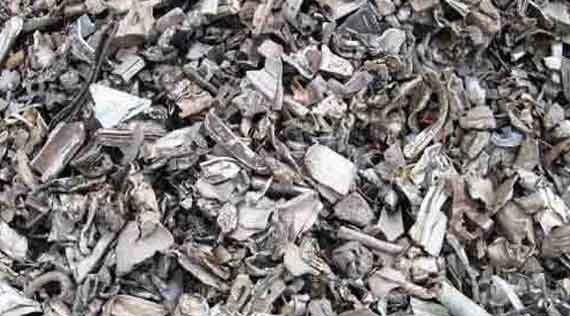
Zorba 90% NF Scrap is a shredded mixed nonferrous-metal product recovered from automobiles, appliances and other end-of-life metal-containing equipment. Aluminum is generally the predominant metal, but the material can also contain copper, zinc, magnesium, lead, nickel, tin and stainless steel in elemental or alloyed form.
Under ReMA/ISRI specifications, Zorba 90 means approximately 90% total nonferrous-metal content, not 90% aluminum. Its commercial value depends on the recovered metal mixture, nonferrous percentage, contamination, particle size, downstream processing requirements and buyer-seller agreement.
Zorba 90% NF Scrap: Quick Facts
- Material category: Shredded mixed nonferrous scrap
- ReMA/ISRI code: Zorba
- Official description: Shredded Nonferrous Scrap (Predominantly Aluminum)
- Zorba 90: Approximately 90% total nonferrous-metal content
- Primary constituent: Usually aluminum
- Other potential metals: Copper, zinc, magnesium, lead, nickel, tin and stainless steel
- Processing: Shredding, magnetic separation and nonferrous separation
- Critical exclusions: Radioactive material, dross and ash
- Related grades: Twitch, Tweak, Vesper, Ginger and Zurik
- Common suppliers: Auto shredders and downstream metal-recovery facilities
- Potential buyers: Nonferrous processors, sensor-sorting facilities and secondary-metal consumers
What Is Zorba Scrap?
Zorba is a recognized recycled-metal commodity consisting of shredded mixed nonferrous material that is predominantly aluminum.
It is produced through industrial separation of shredded scrap generated from end-of-life vehicles, appliances and other metal-containing goods.
The material can include a combination of:
- Aluminum and aluminum alloys
- Copper and copper alloys
- Zinc and zinc alloys
- Magnesium and magnesium alloys
- Stainless steel
- Nickel
- Tin
- Lead
The proportions depend on the incoming shredder material and the equipment used to recover and upgrade the metal fractions.
Important distinction: Zorba is not a pure-aluminum scrap grade. It is a mixed-metal concentrate whose commercial specification includes an estimated total nonferrous-metal percentage.
What Does Zorba 90% NF Mean?
The number following the Zorba designation identifies the estimated percentage of total nonferrous metal in the shipment.
- Zorba 90: Approximately 90% total nonferrous-metal content
- Zorba 95: Approximately 95% total nonferrous-metal content
The balance may include nonmetallic residue or other material, depending on the actual shipment. The numeric designation alone does not fully describe contamination or alloy composition.
Zorba 90 does not mean the shipment contains 90% aluminum.
Aluminum is normally the predominant metal, but individual percentages of aluminum, copper, zinc, magnesium and other constituents must be established separately.
Under ReMA/ISRI requirements, the metal mixture and specific quality expectations are subject to agreement between buyer and seller.
ReMA/ISRI Zorba Scrap Specification
The Recycled Materials Association (ReMA) maintains the ISRI Specifications used as reference descriptions in recycled commodity transactions.
Zorba is the trade code for Shredded Nonferrous Scrap (Predominantly Aluminum).
The specification permits mixed nonferrous-metal material generated through eddy-current separation, air separation, flotation, screening and other suitable segregation techniques.
Mandatory Preparation and Exclusions
The material must have passed through one or more magnets to reduce or eliminate free iron and large iron attachments.
Zorba must be free of:
- Radioactive material
- Dross
- Ash
The specification also permits material to be screened and commercially described using specific particle-size ranges.
Buyer-Seller Requirements
The percentage of individual nonferrous metals must be established by agreement between the buyer and seller.
Commercial arrangements should also address residual iron, nonmetallic contamination, moisture, particle size, sampling and any special requirements imposed by the receiving facility.
Specification note: The Zorba number describes estimated total nonferrous-metal content. It does not independently establish a guaranteed aluminum percentage, copper percentage or standardized selling price.
Where Does Zorba Scrap Come From?
Zorba is commonly produced by large scrap shredders and downstream recovery facilities processing mixed durable goods.
Typical sources include:
- End-of-life vehicles: Automobile and truck shredder operations
- Household appliances: Suitable shredded appliances and equipment
- Industrial equipment: Mixed metal components recovered during dismantling
- Demolition scrap: Appropriate mixed-metal feedstock
- Light-gauge scrap: Mixed ferrous and nonferrous material prepared for shredding
- Other shredder feed: Metal-containing products suitable for industrial mechanical recovery
The composition of the incoming scrap influences the aluminum content, heavy-metal fractions and contamination levels in the recovered Zorba.
Not all shredder feed is suitable for direct processing. Batteries, fluids, hazardous components and other restricted materials may require removal or special management before shredding.
How Is Zorba 90 Scrap Produced?
Zorba production involves separating nonferrous metals from a shredded mixed-metal stream.
A typical recovery operation may include:
- Feedstock preparation: Incoming scrap is inspected and unsuitable materials are removed or managed.
- Shredding: Vehicles, appliances or other feedstock are mechanically reduced into smaller fragments.
- Magnetic separation: Ferrous metal is separated from the shredded stream.
- Air separation: Lightweight residue and selected nonmetallic material may be removed.
- Screening: Material is separated into particle-size fractions.
- Eddy-current separation: Conductive nonferrous particles are recovered from suitable mixed material.
- Additional upgrading: Density or sensor-sorting systems may recover more concentrated metal fractions.
- Quality verification: The final product is evaluated against the agreed Zorba specification.
The exact equipment and processing sequence vary by facility, feedstock and the grade being produced.
What Is Eddy-Current Separation?
Eddy-current separation is a technology used to recover conductive nonferrous metals from suitable mixed-material streams.
The equipment creates a changing magnetic field that induces electrical currents in conductive particles. The interaction produces forces that can separate certain nonferrous metals from other materials.
Eddy-current systems are commonly used after ferrous metal removal in shredder recovery operations.
They are useful for recovering a mixed nonferrous fraction, but an eddy-current separator does not automatically separate aluminum into individual alloy grades or isolate every copper and zinc particle.
Additional processing may be required to upgrade Zorba into more narrowly defined metal products.
Why Is Zorba Primarily Aluminum?
Aluminum can make up the largest metal fraction in Zorba because many vehicles, appliances and other manufactured products contain significant amounts of aluminum.
Following magnetic removal of much of the ferrous metal, downstream recovery systems can collect aluminum together with other nonferrous constituents.
The actual aluminum percentage varies with the original material mix and separation performance.
For commercial evaluation, buyers should confirm aluminum content rather than assuming a fixed percentage from the Zorba designation.
Zorba vs. Twitch: What Is the Difference?
Zorba is a mixed nonferrous fraction that is predominantly aluminum but may contain several other metals.
Twitch is a more closely specified aluminum-rich fragmentizer scrap grade recovered from automobile-shredder material through wet or dry media separation.
The ReMA/ISRI Twitch specification requires dry material with:
- Maximum 1% free zinc
- Maximum 1% free magnesium
- Maximum 1% analytical iron
- Maximum 2% total nonmetallics
- Maximum 1% rubber and plastics within the total nonmetallic allowance
Twitch must also be free of excessively oxidized material, airbag canisters and sealed or pressurized items.
Commercial distinction: Twitch has more specific aluminum-feedstock quality limits than general Zorba. However, Twitch is not automatically worth a fixed premium over every Zorba shipment.
Zorba vs. Tweak Aluminum Scrap
Tweak is another recognized fragmentizer aluminum grade recovered from automobile-shredder material.
It can be produced through mechanical or manual separation and has different allowable contamination levels from Twitch.
Under ReMA/ISRI specifications, Tweak must be dry and must not exceed:
- 4% free zinc
- 1% free magnesium
- 1.5% analytical iron
- 5% total nonmetallics
- 1% rubber and plastics within the total nonmetallic allowance
It must also be free of excessively oxidized material, airbag canisters and sealed or pressurized items.
Compared with Twitch, Tweak permits higher free-zinc, iron and total nonmetallic content.
Zorba vs. Twitch vs. Tweak: Grade Comparison
| Characteristic | Zorba | Twitch | Tweak |
|---|---|---|---|
| Material | Mixed nonferrous | Aluminum-rich fragmentizer | Fragmentizer aluminum |
| Free zinc | Buyer-seller agreement | 1% maximum | 4% maximum |
| Free magnesium | Buyer-seller agreement | 1% maximum | 1% maximum |
| Analytical iron | Magnetic processing required | 1% maximum | 1.5% maximum |
| Nonmetallics | Buyer-seller agreement | 2% maximum | 5% maximum |
These grades serve different processing requirements. The most appropriate specification depends on actual metal composition, contamination and downstream customer needs.
What Is Vesper Aluminum Scrap?
Vesper is a ReMA/ISRI specification for wrought aluminum mechanically separated from Zorba or Twitch.
Wrought aluminum is aluminum that has been mechanically worked into products such as sheet, plate and extrusions, rather than formed directly into final shapes through casting.
Vesper may include suitable:
- Aluminum sheet
- Aluminum extrusions
- Aluminum plate
Under the specification effective August 22, 2025, Vesper must be dry and meet these limits:
- Maximum 1% free magnesium
- Maximum 1% free zinc
- Maximum 0.5% analytical iron
- Maximum 1% nonmetallics
It must be free of excessively oxidized material, airbag canisters and sealed or pressurized items.
Vesper is significant because it establishes a more targeted wrought-aluminum recycling stream from material that might previously have remained in a broader mixed shredder fraction.
What Is Ginger Shredded Aluminum Cast?
Ginger is a newer ReMA/ISRI specification for mixed shredded cast aluminum mechanically separated from Zorba and Twitch.
The specification became effective June 19, 2026.
Cast aluminum is produced by solidifying molten aluminum alloy inside a mold. Castings may have different chemistry from wrought sheet and extrusion products.
Ginger requires dry material with:
- Maximum 1% free magnesium
- Maximum 1% free zinc
- Maximum 1% free iron
- Maximum 1% nonmetallics
Material must be free of excessively oxidized scrap, airbag canisters and sealed or pressurized items.
Ginger provides a recognized commercial description for suitable cast aluminum recovered through downstream metal-separation technology.
Why Are Vesper and Ginger Important?
Zorba commonly contains both wrought and cast aluminum alongside other nonferrous metals.
These aluminum families can have different alloy chemistry and downstream manufacturing applications.
Improved mechanical and sensor-based separation can help recover more targeted aluminum fractions from mixed shredder products.
Vesper identifies suitable wrought-aluminum material, while Ginger describes suitable shredded cast aluminum.
Separating these streams can help processors:
- Reduce unwanted alloy mixing
- Improve feedstock consistency
- Meet more specific customer requirements
- Recover heavy nonferrous metals separately
- Improve the commercial evaluation of individual recovered fractions
However, higher purity does not automatically guarantee better financial returns. The economic benefit depends on sorting costs, recovery yields, throughput and market demand.
Zorba vs. Zurik: What Is the Difference?
Zorba and Zurik are both recognized shredded mixed-metal grades, but they differ in predominant material and processing.
Zorba is a predominantly aluminum mixed nonferrous scrap fraction.
Zurik is a sensor-sorted mixed-metal fraction that is predominantly stainless steel.
Zurik can contain stainless steel, insulated copper wire, aluminum, copper, lead, magnesium, nickel, tin and zinc.
The ReMA/ISRI Zurik specification describes material produced using computer-sensing systems, including induction or X-ray sorting technology.
Like Zorba, Zurik uses a following number to indicate estimated total nonferrous-metal content.
Sorting distinction: The presence of some stainless steel in Zorba does not automatically make it Zurik. The predominant material and actual grade requirements determine classification.
Why Is Particle Size Important in Zorba Scrap?
ReMA permits Zorba to be screened and described by specific particle-size ranges.
Particle size matters because metal-separation equipment performs differently depending on the dimensions, mass and physical characteristics of the material being processed.
A consistent size range can help downstream processors establish more predictable sorting conditions.
Commercial Zorba transactions may therefore specify both an estimated nonferrous percentage and a minimum or maximum particle-size range.
The appropriate size specification depends on the buyer's equipment and processing requirements.
How Is Zorba Upgraded Through Advanced Sorting?
Downstream recyclers may process Zorba further to recover more concentrated aluminum and other nonferrous-metal fractions.
Technologies can include:
Density and Sink-Float Separation
Density-based processes can help separate materials with different physical densities, subject to the selected medium, particle size and operating conditions.
X-Ray Transmission Sorting
X-ray transmission systems can distinguish selected materials based on their interaction with X-rays and support separation of different metal fractions.
Induction Sensor Sorting
Induction sensors can help identify and eject conductive metal particles from suitable mixed-material streams.
Optical and Color Sorting
Optical systems can distinguish some materials using appearance or other measured optical characteristics. Their performance depends on surface condition and equipment configuration.
Additional Eddy-Current Separation
Additional separation stages may recover conductive nonferrous particles that were not captured in earlier processing.
Screening and Particle-Size Control
Material can be separated into selected size ranges before further metal sorting.
These technologies may be combined to recover wrought aluminum, cast aluminum, copper-rich material, zinc-bearing fractions, stainless steel and other products.
Not every facility uses the same equipment or produces all these grades.
What Determines Zorba 90 Scrap Quality?
A Zorba shipment's stated nonferrous percentage is only one part of its commercial quality.
Important considerations include:
- Total nonferrous content: Estimated recoverable mixed nonferrous-metal percentage
- Aluminum concentration: Proportion of aluminum within the nonferrous fraction
- Heavy nonferrous content: Copper, zinc and other metals affecting downstream recovery
- Ferrous contamination: Residual free iron and attached ferrous materials
- Nonmetallic content: Plastics, rubber, dirt and other unwanted material
- Particle size: Suitability for the buyer's sorting and recovery equipment
- Moisture: Material condition and agreed handling limits
- Restricted materials: Radioactive material, dross and ash are prohibited under the Zorba specification
- Batch consistency: Variation in composition between samples and shipments
Industrial purchasers may require representative samples, assay results or other quality documentation before finalizing a purchase.
Zorba 90 Scrap Prices: What Affects the Value?
Zorba 90 is an industrial mixed-metal commodity. Its price cannot be determined from the aluminum price alone.
Buying terms depend on the recoverable metal mix, processing costs and the requirements of the receiving buyer.
Important Pricing Factors
- Total nonferrous-metal content
- Aluminum percentage
- Copper and other heavy-metal content
- Magnesium and zinc concentration
- Residual free iron
- Nonmetallic contamination
- Particle-size distribution
- Moisture and shipment condition
- Sampling and assay requirements
- Shipment quantity and consistency
- Transportation and handling costs
- Domestic and export market demand
- Downstream sorting and processing capacity
Zorba should therefore be evaluated against the buyer's agreed mixed-metal specification rather than treated as ordinary clean aluminum scrap.
Available Zorba Scrap Prices
Review available RecyclingMonster price records below only where the material is correctly identified as Zorba or an explicitly comparable grade. Confirm the reporting date, market, currency, unit and material definition.
The prices listed below are country averages paid by recycling centers in the United States
| Scrap Material | National Average | High Price | Low Price | Unit | Updated |
|---|---|---|---|---|---|
| Aluminum Borings Scrap | $0.25 | 0.25 | 0.25 | USD/LB | 2025-08-04 |
| Aluminum Breakage Scrap | $0.13 | 0.13 | 0.13 | USD/LB | 2025-01-13 |
| Aluminum Breakage Scrap 50% Recovery | $0.2 | 0.2 | 0.2 | USD/LB | 2019-07-31 |
| Aluminum Breakage Scrap >50% Recovery | $0.07 | 0.07 | 0.07 | USD/LB | 2019-06-24 |
| Aluminum BX (MC) Scrap | $1.6 | 1.6 | 1.59 | USD/LB | 2018-04-20 |
For broader market context, consult Aluminum Scrap Prices and Current Scrap Metal Prices.
General aluminum, aluminum breakage, borings and other grades are not interchangeable with Zorba 90 pricing.
Is Zorba 95 Always Worth More Than Zorba 90?
Not necessarily.
A higher estimated nonferrous percentage can indicate less non-nonferrous material and may improve the theoretical amount of recoverable metal.
However, the value also depends on which metals are present.
For example, two shipments may have different copper, aluminum, zinc and magnesium compositions even when their total nonferrous percentages are similar.
Downstream sorting costs, recoverable metal yields and buyer requirements also matter.
Commercial principle: Compare Zorba shipments by their agreed composition and recovery economics, not solely by the number following the grade name.
How to Prepare Zorba 90 for Commercial Sale
Preparation should focus on meeting the buyer's agreed nonferrous percentage, material size, contamination and shipping requirements.
- Confirm the material category: Identify the product as predominantly aluminum mixed shredded nonferrous scrap.
- Document the nonferrous percentage: Establish the basis for describing the shipment as Zorba 90.
- Complete magnetic processing: Reduce free iron and large ferrous attachments according to the specification.
- Check prohibited materials: Exclude radioactive material, dross and ash.
- Control nonmetallic contamination: Manage plastic, rubber, dirt and other unwanted fractions.
- Confirm particle size: Screen or classify the product according to the buyer's requirements.
- Document metal composition: Record aluminum and other recoverable constituents where testing is available.
- Assess moisture: Follow applicable storage and shipping requirements.
- Provide representative information: Buyers may require samples, photographs, test results and production history.
- Confirm commercial terms: Establish inspection, deductions, transport and settlement procedures before loading.
Safety note: Zorba may contain sharp metal fragments and metals requiring controlled industrial processing. Shredder operations, sorting equipment and potentially hazardous items must be managed through appropriate workplace and environmental procedures. Sealed or pressurized components require particular care.
How Is Zorba Recycled Into New Metal Products?
Zorba is often an intermediate metal-recovery product rather than finished furnace-ready aluminum feedstock.
Downstream processors may separate its different metal constituents before transferring them to smelters, refiners or secondary-metal manufacturers.
A recovery process may include:
- Receiving and inspection: The load is weighed and assessed against the agreed specification.
- Screening: Particles are separated into suitable size fractions.
- Metal separation: Remaining ferrous and nonferrous fractions are separated or upgraded.
- Density or sensor sorting: Aluminum-rich and heavy-metal-rich fractions may be recovered.
- Alloy-family separation: Suitable wrought and cast aluminum may be separated into different streams.
- Quality verification: Recovered metal fractions are evaluated for composition and contamination.
- Downstream processing: Accepted metal fractions are sent to suitable industrial recovery facilities.
- Manufacturing: Secondary metals are used in new products according to their chemical and physical specifications.
Not every Zorba shipment follows the same recovery path. Equipment capabilities, material composition and commercial demand determine the processing route.
Where Can You Sell Zorba 90% NF Scrap?
Zorba is generally purchased and processed through specialized industrial scrap-recovery businesses rather than ordinary household recycling programs.
Potential buyers include:
- Automotive shredder operators
- Downstream nonferrous recovery processors
- Mixed-metal separation plants
- Sensor-sorting facilities
- Specialized nonferrous scrap traders
- Secondary aluminum and other metal processors accepting suitable feedstock
Zorba 90% NF Scrap: Prices, Grades & Recycling - Material Specifications, How to Sell & Current Price accepting recycling centers in the United States
- M Weinstein & Sons2426
Morris Avenue
Union ,New Jersey - Evergreen Recycling Solutions, LLC110 Evergreen Ave
Newark,New Jersey - CIRG Metal USA, LLC 148 Shaw Ave
Irvington,New Jersey - Dublin Scrap Metal489 Frelinghuysen Ave
Newark,New Jersey - Freedom Metals, LLC-Newark,NJ 960 Frelinghuysen Avenue
Newark,New Jersey
Use RecyclingMonster's Recycle an Item directory and Metal Recycling Centers Directory to research potential buyers and processors.
Directory inclusion does not confirm that a facility currently purchases Zorba 90. Contact buyers to verify specifications, minimum quantities, testing requirements and purchasing terms.
Bulk Zorba 90: Commercial Buying and Selling Requirements
Large-volume Zorba transactions commonly involve shredders, metal separation companies, nonferrous processors and industrial commodity traders.
Before offering or purchasing a shipment, confirm:
- ReMA/ISRI Zorba specification or agreed alternative
- Estimated total nonferrous percentage
- Aluminum concentration
- Copper and other heavy nonferrous content
- Free iron and residual ferrous contamination
- Magnesium and zinc concentration
- Nonmetallic contamination limits
- Prohibited or restricted material exclusions
- Particle-size distribution
- Moisture and storage requirements
- Sampling and assay methodology
- Material origin and processing history
- Load photographs and representative samples
- Monthly or annual available tonnage
- Container, trailer or export packaging requirements
- Delivery terms, freight and insurance
- Currency, price basis and weight units
- Inspection, adjustment and rejection conditions
- Payment and settlement procedures
Documenting the actual metal mixture is especially important. Two shipments both described as Zorba 90 may have different downstream recovery values.
Frequently Asked Questions About Zorba 90 Scrap
Does Zorba 90 mean 90% aluminum?
No. Zorba 90 means approximately 90% total nonferrous-metal content. Aluminum is usually predominant, but its exact percentage can vary.
What is the ReMA/ISRI specification for Zorba?
Zorba is shredded mixed nonferrous scrap that is predominantly aluminum. It requires magnetic processing and excludes radioactive material, dross and ash.
What is the difference between Zorba and Twitch?
Zorba is mixed shredded nonferrous scrap. Twitch is a more narrowly specified aluminum-rich fragmentizer grade with defined contamination limits.
What are Vesper and Ginger aluminum scrap?
Vesper is separated wrought aluminum, while Ginger is separated shredded cast aluminum. Both can originate from downstream upgrading of Zorba or Twitch.
How much is Zorba 90 scrap worth?
Pricing depends on total nonferrous content, aluminum and heavy-metal composition, contamination, particle size, processing costs, quantity and market conditions.
Explore More Scrap Metal and Recycling Resources
Research related aluminum materials, compare scrap-metal market data and find industrial recycling resources through RecyclingMonster.
- Aluminum Scrap Prices
- Mixed Aluminum Scrap Prices
- Scrap Metal Price Database
- 6063 Aluminum Extrusions Material Guide
- Find Recycling Centers by Material
- Metal Recycling Centers and Scrap Yards
- Scrap Expo: Advanced Aluminum Sorting
- Scrap Materials and Specifications Library
- Recycling Industry News and Articles
- RecyclingMonster Homepage
Material information notice: Zorba specifications, nonferrous percentages, prices and buyer acceptance depend on actual material composition, condition, location and commercial terms. ReMA/ISRI trade terminology is provided for educational reference. Final material grading, inspection, shipment requirements and settlement conditions depend on the buyer-seller agreement.