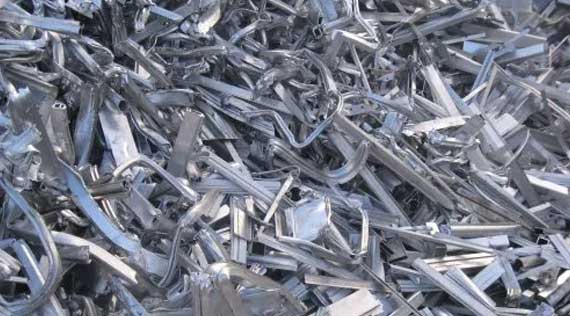
309 Stainless Steel Scrap is a chromium-nickel austenitic stainless grade designed primarily for elevated-temperature service. Its higher chromium and nickel content gives it better resistance to oxidation at high temperatures than common 304 stainless, making 309 an important specialty stainless scrap stream.
Because 309 can look similar to other stainless grades, accurate identification is important when selling commercial quantities or processing mixed alloy scrap.
What Is 309 Stainless Steel?
Type 309, including commonly used low-carbon 309S, is an austenitic stainless steel containing substantially more chromium and nickel than standard 304 stainless.
Typical 309S compositions contain roughly 22% chromium and 12% to 14% nickel. That alloy balance is designed to provide good strength and oxidation resistance in high-temperature service.
309 stainless is commonly used in applications operating above approximately 550°C (1,020°F), where resistance to scaling, oxidation and high-temperature corrosion becomes particularly important.
Common Uses of 309 Stainless Steel
- Industrial furnace components
- Furnace linings and supporting parts
- Annealing and heat-treatment equipment
- Thermowells
- Baffle plates
- Burner and combustion-system components
- High-temperature ducting
- Boiler and thermal-processing equipment
- Equipment used in steel, nonferrous and cement plants
309 Stainless vs. 304 Stainless
304 stainless steel is a general-purpose chromium-nickel grade widely used for food equipment, tanks, architectural products and fabrication.
309 contains substantially more chromium and nickel and is designed for higher-temperature service. That makes 309 more resistant to oxidation and scaling at elevated temperatures.
However, 309 should not be described simply as more corrosion-resistant than 304 in every environment. High-temperature stainless grades are optimized primarily for thermal service, and corrosion performance depends on the specific chemical and operating environment.
309 Stainless vs. 310 Stainless
310 stainless steel is another high-temperature austenitic stainless grade, but it contains still higher chromium and nickel than 309.
Both alloys are used in furnace and thermal-processing applications. 310 is generally selected for more severe high-temperature conditions, while 309 provides a balance of heat resistance, fabrication characteristics and alloy content.
Because the two alloys can look virtually identical, industrial scrap should be identified by source records or alloy analysis rather than appearance.
Is 309 Stainless Steel Magnetic?
309 is an austenitic stainless grade and is generally non-magnetic or only weakly magnetic in the annealed condition.
Cold working, forming or fabrication can introduce some magnetic response, so a magnet should not be used by itself to identify 309 stainless.
How Can You Identify 309 Stainless Scrap?
Visual inspection alone cannot reliably distinguish 309 from 304, 310 or several other stainless alloys.
For industrial or higher-value loads, processors may use:
- Mill certificates or material records
- Known equipment or production sources
- Handheld XRF analyzers
- Other positive material identification methods
Source segregation is particularly useful when 309 comes from known furnace or heat-treatment equipment.
What Affects 309 Stainless Steel Scrap Prices?
309 Stainless Steel Scrap prices are influenced by nickel and chromium markets, alloy certainty, cleanliness, material form, contamination, quantity, location and buyer demand.
Clean, positively identified 309 solids may be valued differently from mixed stainless, contaminated material, turnings or scrap carrying significant carbon-steel attachments.
RecyclingMonster includes 309 Stainless Steel observations in its Stainless Steel Scrap Prices database. Because individual specialty-alloy quotes may be updated less frequently than general stainless prices, always check the date and location attached to each price before using it as a market reference.
How to Maximize 309 Stainless Scrap Value
- Keep known 309 separate from 304, 310, 316 and mixed stainless.
- Preserve alloy certificates or equipment records when available.
- Remove excessive carbon-steel attachments and other contamination when economically practical.
- Keep clean solids separate from turnings and machining debris.
- Use positive material identification for mixed specialty-alloy loads.
- Confirm the buyer's preparation and size requirements before processing a large shipment.
Where Can You Sell 309 Stainless Steel Scrap?
309 stainless is purchased by stainless-steel processors, specialty-alloy recyclers and metal recycling centers. Not every yard prices specialty stainless grades separately, so sellers should confirm that the buyer specifically recognizes 309 before delivery.
Use RecyclingMonster's Metal Recycling Center Directory to locate scrap yards and alloy processors, or use the Recycle an Item search to find facilities accepting stainless steel and specialty alloys.
Have Large Quantities of 309 Stainless?
Industrial furnaces, heat-treatment operations, steel plants, foundries and equipment manufacturers can generate significant quantities of 309 stainless during equipment replacement, maintenance and fabrication.
For bulk loads, separate known alloys before pickup and request quotes from processors that handle specialty stainless. Container service, freight, alloy verification and delivered-versus-pickup pricing can materially affect the net value of the shipment.