Electronic materials will be disassembled and sorted into recoverable categories ready to be turned back into raw materials needed by manufactures. Recovered materials include plastics that are used to make new covers and cases, metals used in many new products, and recovered cathode ray tube (CRT) glass used to make new products or recover lead.
Recycling Benefits
Recycling scrap tires and electronics helps to prevent hazardous pollution, promote environmental health and conserve scarce resources such as precious metals. By reducing pollutants which are in the air, water and soil, scrap tire and electronic recycling can prevent harmful effects on the environment. Reusing some hazardous substances or using them to remanufacture useful products decreases the need for producing more hazardous substances, thus helping to save money and reduce pollutants.
Environmental Risks
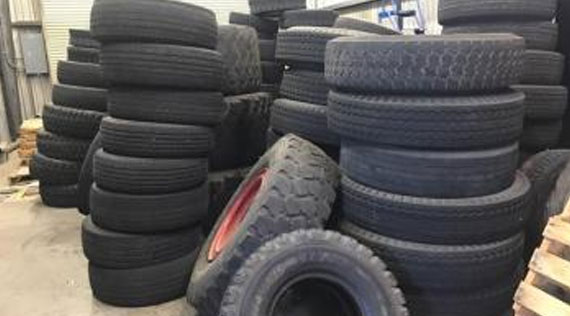
Scrap tires and electronics can pose a significant risk to the environment. Tires and electronics have an ability to be easily recycled. Scrap tires are not good landfill candidates because they tend to float to the surface of the landfill because of trapped methane gases. Additionally, tire piles can pose a fire hazard and if they catch fire, impacting surface and groundwater. Electronics also pose environmental hazards. 80 to 85% of electronic products are disposed of in landfills and can release toxins into the air. Electronics waste represents 2% of trash in landfills, but create 70% of overall toxic waste. E-waste is the fastest growing waste stream in America, according to the EPA. In 2019, The U.S. generated 6.92 million pounds of e-waste — that’s 46 pounds per person. In the same year, only 15% of the e-waste was recycled in the U.S. Simply recycling 1 million laptops saves the energy equivalent of powering 3,657 homes annually.
Funding
Funding for scrap tire disposal was made possible by a Michigan Department of Environment Quality (MDEQ) Scrap Tire Cleanup Grant. Funding for the electronics recycling was made possible by grants and partnerships with Cargill, Osceola-Lake Community Foundation, and Osceola County. Donations to help keep these events funded in future years are also greatly appreciated. If you have any questions, contact the Osceola-Lake Conservation District at (231) 465-8012 or email mark.sweppenheiser@macd.org.
Mark Sweppenheiser is the District Manager for Osceola-Lake Conservation District. For more information, contact him at (231) 465-8012, mark.sweppenheiser@macd.org, or stop by the Osceola-Lake Conservation District Office at 138 W. Upton, Suite 2, Reed City.