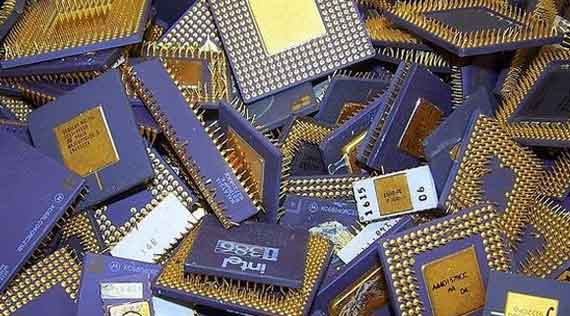
CPU processors are a distinct category of electronic scrap recovered from desktop computers, laptops, servers and other computing equipment. Their recycling value depends on processor construction, recoverable metal content, material condition and the purchasing requirements of the recycler or refiner.
Not all processors are alike. Older ceramic processors, pin-grid-array CPUs and newer organic-substrate processors may be purchased under different scrap grades. Identifying and separating these materials helps buyers assess them more accurately.
CPU Processor Scrap: Quick Facts
- Material category: Electronic scrap (e-scrap)
- Common sources: Desktop PCs, servers, workstations and laptops
- Common scrap groups: Ceramic CPUs, fiber/organic-substrate CPUs, pin-type CPUs and contact-pad CPUs
- Potentially recoverable metals: Gold, copper, silver and, in some designs, other precious or base metals
- Important grading factors: Processor model, packaging, contact type, condition and attached components
- Typical buyers: Specialized electronics scrap processors, e-scrap buyers and precious-metal refiners
What Are CPU Processors?
A central processing unit (CPU) is a semiconductor device that executes instructions and performs computational operations in a computer or other electronic system. Modern processors contain highly integrated circuits with large numbers of transistors housed within protective packaging.
Scrap CPU processors may come from personal computers, enterprise servers, industrial computers and other retired electronics. Processing functions in mobile phones and tablets are commonly integrated into system-on-chip (SoC) devices, which may remain attached to circuit boards and are not necessarily traded as loose desktop CPU scrap.
The processor assembly can contain a semiconductor die, a ceramic or organic substrate, electrical contacts and, depending on its design, a metal heat spreader. External heatsinks and fans are separate cooling components and may need to be removed before the CPU is sold as a processor-only scrap grade.
Types of Scrap CPU Processors
Electronics recyclers commonly distinguish CPU scrap by physical construction and buyer-specific grading requirements. The following categories explain the principal differences.
1. Ceramic CPU Processors
Ceramic CPUs use ceramic packaging and are commonly associated with older generations of computer processors. Some models contain gold-plated pins, gold-bearing internal connections or other precious-metal-bearing components.
Selected older ceramic processors can command higher scrap values because of their construction and recoverable metal content. However, ceramic packaging alone does not establish a particular gold content or guaranteed price.
2. Fiber and Organic-Substrate CPUs
These processors use non-ceramic package substrates, often appearing green or brown. They are found across several generations of desktop, laptop and server processors.
Some have pin-grid-array connections, while others have flat contact pads. Precious-metal content varies by processor design, and recyclers may classify different models separately.
3. Pin-Type CPU Processors (PGA)
Pin Grid Array (PGA) processors have arrays of projecting electrical pins on the underside of the package. Depending on the processor, the pins or contacts may contain thin gold plating.
Pin condition, packaging type and processor model can affect grading. A processor with missing or heavily damaged pins may not qualify for the same buyer category as an intact unit.
4. Flat-Contact CPU Processors (LGA)
Land Grid Array (LGA) processors use flat electrical contact pads instead of projecting processor pins. These pads may have gold-plated contact surfaces.
LGA processors are common in more recent desktop and server designs. Their scrap value should not be estimated from the number or appearance of contact pads alone.
5. Server and Specialized Processors
Processors removed from servers, workstations and specialized computing equipment may differ substantially in size, packaging and recoverable materials.
Some buyers offer separate categories for specific server CPU families. Others purchase them together with comparable processor grades. Model identification is especially useful when evaluating specialized or potentially reusable processors.
What Precious Metals Are Found in CPU Processors?
CPU assemblies may contain several recoverable metals. Their presence and concentration depend on the processor's design, manufacturing technology and packaging.
- Gold: May be present in plated electrical contacts, selected pins, internal bonding connections or other package features.
- Silver: May occur in certain electronic packaging, joining materials or conductive components, depending on design.
- Copper: Used extensively in electronic interconnections, package structures and associated thermal components.
- Palladium: May be present in certain electronic components or materials, but should not be assumed to occur in commercially significant quantities in every CPU.
- Other metals: Processor packages may include nickel, tin and other metals or alloys used for plating, interconnection and assembly.
Important: Visible gold-colored surfaces do not establish the weight of recoverable gold. Plating thickness, underlying materials and recovery efficiency matter. Reliable precious-metal valuation may require model-specific reference information, sampling or professional assay.
Ceramic vs. Fiber CPU Scrap: What Is the Difference?
| Feature | Ceramic CPU | Fiber / Organic CPU |
|---|---|---|
| Packaging | Ceramic-based | Organic or composite substrate |
| Typical appearance | Often rigid, light or dark ceramic | Often green or brown substrate |
| Connections | Pins or other package contacts | Pins, pads or other contacts |
| Precious-metal content | Varies by model; some older designs are gold-rich | Varies by generation and package design |
| Scrap grading | Often evaluated as a separate ceramic grade | Often graded by processor family and construction |
Some older ceramic CPU grades are valuable in precious-metal recovery markets, but it is inaccurate to assume that every ceramic CPU is worth more than every organic-substrate CPU. Buyer specifications and verified processor identification determine the appropriate comparison.
How to Identify Scrap CPU Processors
Before combining processors into a shipment, check the physical characteristics and identifying markings.
- Check the processor model: Record manufacturer, product family and part number where legible.
- Identify the package: Separate ceramic packages from organic or other packaging types where required.
- Inspect the contacts: Determine whether the processor uses pins, flat contact pads or another configuration.
- Check for attached parts: Identify heatsinks, fans, mounting brackets and other accessories.
- Examine condition: Note broken substrates, missing pins, excessive thermal compound or other damage.
- Confirm the buyer's grade: Use the receiving recycler's written specifications before mixing lots.
Identification tip: Package color, size and the presence of pins are useful screening characteristics, but they cannot reliably establish exact precious-metal content.
What Affects CPU Processor Scrap Prices?
CPU processor scrap prices are determined by the grade being purchased and the buyer's assessment of recoverable value. The price of an individual lot may differ substantially from general electronics scrap quotations.
Important factors include:
- Processor type and model: Specific processor families can have different recovery characteristics and resale potential.
- Precious-metal content: Recoverable gold and other metals can influence the value of suitable refining grades.
- Condition: Missing pins, broken packages or excessive attached material may affect buyer classification.
- Sorting quality: Clearly separated, correctly identified grades can be easier for buyers to evaluate.
- Shipment quantity: Larger, consistent lots may qualify for different commercial terms, although higher prices are not guaranteed.
- Market conditions: Precious-metal prices, processing costs and buyer demand influence purchasing decisions.
- Testing and settlement: Some refining transactions are based on sampling, assay, recovery terms and applicable deductions.
CPU Processor Scrap Prices
Check available RecyclingMonster price records below. Verify the quoted material, location, unit and reporting date before using any listed amount to estimate CPU scrap value.
The prices listed below are country averages paid by recycling centers in the United States
| Scrap Material | National Average | High Price | Low Price | Unit | Updated |
|---|---|---|---|---|---|
| Green Mother Boards | $1.17 | 1.17 | 1.17 | USD/LB | 2023-05-22 |
| Ceramic Processors Scrap | $6.82 | 6.82 | 6.82 | USD/LB | 2022-06-06 |
| Computer/Server (Complete) Scrap | $0.24 | 0.25 | 0.24 | USD/LB | 2020-05-07 |
| Processor W/Pins Scrap | $6.48 | 6.48 | 6.48 | USD/LB | 2018-10-03 |
| Processor W/O Pins Scrap | $1.05 | 1.05 | 1.05 | USD/LB | 2018-10-03 |
For broader industry comparisons, visit the RecyclingMonster Electronics Scrap Price Guide. Electronics category averages and prices for other electronic materials are not CPU-specific purchase quotations.
How to Sort and Prepare CPU Scrap for Sale
Sorting CPU scrap according to the buyer's requirements can make commercial grading and processing more consistent.
- Separate ceramic processors from organic-substrate processors when the buyer uses different categories.
- Keep clearly identified processor families separate when model-specific purchasing terms are offered.
- Remove external cooling fans, loose heatsinks and mounting hardware if the receiving buyer requires processor-only material.
- Keep processors dry and reasonably free from unrelated debris.
- Protect intact pins and contacts from avoidable damage during handling and transport.
- Package different grades in labeled containers and record the weight of each lot.
- Obtain the receiving facility's acceptance, grading and payment terms before shipping.
Do not break open processor packages, burn components, grind CPUs or attempt chemical recovery simply to prepare material for sale. These operations can introduce occupational and environmental hazards and should be handled through appropriately equipped facilities.
How Are Scrap CPU Processors Recycled?
Professional electronics recycling and refining operations use different processing methods depending on the processor grade, composition and intended recovery route.
A typical commercial recovery chain may include:
- Receiving and classification: Processors are identified, weighed and sorted into appropriate material streams.
- Reuse evaluation: Functional or otherwise marketable CPUs may be considered for reuse or resale before material recovery.
- Material preparation: Components may be separated or mechanically processed using controlled equipment.
- Metal recovery: Suitable material may be sent for specialized metallurgical treatment to recover precious or base metals.
- Final refining: Recovered metal-bearing outputs may undergo additional refining to meet downstream specifications.
- Residual management: Remaining materials and process residues require management appropriate to their composition and applicable requirements.
Not every processor follows every step. Actual recovery routes depend on the equipment, process design and operating permits of the receiving facility.
Where Can You Sell or Recycle CPU Processors?
Potential buyers include specialized electronics scrap processors, precious-metal recovery companies and certain electronics recycling facilities. General scrap metal yards do not necessarily purchase loose CPUs as a separate grade.
RecyclingMonster maintains a directory of businesses listed as accepting CPU processors. Contact individual facilities to confirm current acceptance, minimum quantities, shipment requirements and purchasing terms.
CPU Processor Scrap: Types, Gold Content & Prices - Material Specifications, How to Sell & Current Price accepting recycling centers in the United States
- Green Brook Electronics945 U.S. Highway 22 West
North Plainfield,New Jersey - Hugo Neu Corp.120 Fifth Avenue Suite 600
New York,New York - Just Rubbish Removal450 Carroll St
Brooklyn,New York - Clean Green Electronic Recycling - Morristown139 Morris St
Morristown,New Jersey - eWorks Electronics Services Inc 230 Hanse Avenue
Freeport,New York
You can also browse recycling centers listed for CPU processors or use the Recycle an Item directory to search for additional recycling options.
Selling CPU Scrap in Bulk: Commercial Considerations
IT asset disposition companies, data centers, electronics dismantlers, equipment refurbishers and other commercial generators may accumulate significant quantities of processor scrap.
For larger transactions, request written confirmation of:
- Accepted CPU grades and required separation
- Minimum shipment quantities and packaging
- Whether prices are fixed, quoted by grade or assay-based
- Sampling and precious-metal settlement procedures, where applicable
- Processing, transportation and refining deductions
- Payment timing and settlement documentation
- Material ownership, insurance and shipment arrangements
- Applicable recycling certifications and downstream management practices
Refiners may impose minimum lot sizes or processing charges. The economics of direct refining depend on material composition, shipment volume, recovery costs and the contract terms. Larger lots do not automatically produce higher net returns.
CPU Scrap Recycling and Environmental Safety
Discarded processors are part of the broader electronic waste stream. Responsible processing matters because electronic equipment can contain materials that require controlled handling, even when individual components also have recoverable metal value.
For U.S. electronics recycling operations, two recognized third-party certification frameworks are R2 and e-Stewards. Facility certification should be verified directly because certification status and service scope can change.
Commercial generators should also consider applicable local electronic waste requirements, equipment ownership, chain-of-custody records and any associated data-bearing devices.
Important distinction: A standalone CPU is not normally the same as a storage drive containing user files. However, some modern electronic systems incorporate multiple functions, including storage, so the complete equipment architecture should be evaluated before disposition.
Frequently Asked Questions About CPU Processor Scrap
Do all CPU processors contain gold?
Gold is used in contacts or internal connections in many processor designs, but its quantity varies. Gold content should not be assumed from color or appearance alone.
Are ceramic CPUs worth more than fiber CPUs?
Some older ceramic CPU grades command higher scrap prices because of their recoverable precious metals. The actual comparison depends on the specific models and the buyer's grading schedule.
Can CPUs be sold without removing their heatsinks?
Some buyers accept CPUs with attached cooling components, while others require processor-only material. Confirm the receiving buyer's requirements before preparing a shipment.
How are CPU scrap prices calculated?
Prices can reflect processor grade, expected recoverable metals, market conditions and processing costs. Certain bulk refining transactions use sampling and assay-based settlements.
Should CPUs be recycled or resold?
Functional or marketable CPUs may have reuse value. End-of-life processors without a practical reuse market can be directed to an appropriate electronics recycler or material recovery operation.
Related Electronics Scrap and Recycling Resources
Processors are only one recoverable material stream within discarded computing equipment. Explore these related RecyclingMonster resources:
Material information notice: Scrap classifications, purchasing requirements and prices vary by recycler, processor, location and reporting date. This guide is educational and does not establish a universal scrap specification, guaranteed metal yield or purchase quotation.