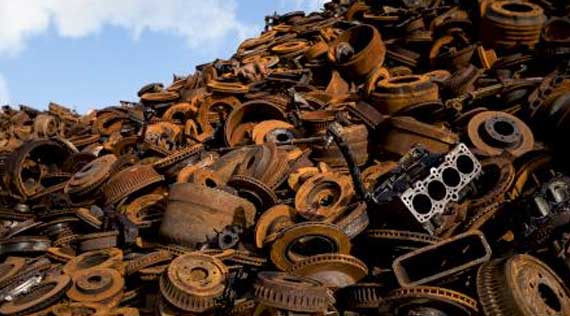
Cast Iron Scrap is a ferrous scrap stream recovered from products and equipment made from cast iron, a family of iron-carbon alloys containing more carbon than conventional steel.
Cast iron is widely used in automotive, industrial, construction, agricultural and municipal applications because it can be cast into complex shapes and engineered for properties such as wear resistance, compressive strength, vibration damping and machinability.
What Is Cast Iron?
Cast iron is an iron-based alloy generally containing more than 2% carbon, with many common cast irons falling in the range of approximately 2% to 4% carbon.
The amount and form of carbon, together with silicon and other alloying elements, help determine the structure and properties of the finished casting.
Unlike rolled sheet or structural steel, cast iron is produced by pouring molten metal into molds to create finished shapes.
What Are the Main Types of Cast Iron?
Cast iron is not one single material. Several families are used in industry, and they can have very different mechanical and metallurgical properties.
- Gray Cast Iron: Contains graphite in flake form and is widely used in engine blocks, machine bases, housings and pipe.
- Ductile Iron: Also called nodular or spheroidal-graphite iron; designed to provide greater ductility and toughness than gray iron.
- Malleable Iron: Heat-treated cast iron used in fittings, hardware and components requiring greater toughness.
- White Cast Iron: A hard, wear-resistant form in which much of the carbon is present as iron carbide rather than free graphite.
- Compacted Graphite Iron: Used in applications requiring a combination of strength, thermal performance and vibration-control properties.
Because these materials are metallurgically different, industrial processors and foundries may distinguish between cast-iron streams when chemistry and end use matter.
Common Sources of Cast Iron Scrap
Cast iron can be found in a wide range of heavy products and industrial equipment.
Common sources include:
- Automotive engine blocks and brake components
- Industrial machinery and equipment
- Machine bases and housings
- Cast-iron pipe and fittings
- Boilers and heating equipment
- Older cast-iron radiators
- Pumps and valve bodies
- Farm and heavy equipment
- Manhole covers and municipal castings
- Cookware and household castings
- Construction and demolition material
How Can You Identify Cast Iron?
Most common cast irons are ferrous and will respond strongly to a magnet. Cast iron is also generally harder and more brittle than ordinary mild steel and is usually encountered as a molded or cast component rather than rolled sheet or structural section.
Large castings often have thicker sections, rounded transitions and shapes that were formed directly in a mold.
However, appearance and magnet response cannot determine the exact cast-iron family or chemistry. Industrial processors and foundries may use source information, documentation or analytical testing when precise identification is required.
Is Cast Iron Magnetic?
Most common gray, ductile, malleable and white cast irons are magnetic because they are iron-based materials.
A magnet can therefore help separate cast iron from many nonferrous metals such as aluminum, copper and brass. It cannot reliably distinguish cast iron from carbon steel, which is also magnetic.
Cast Iron vs. Steel: What Is the Difference?
Cast iron and steel are both iron-based metals, but they differ significantly in carbon content, processing and mechanical properties.
Cast iron generally contains more than 2% carbon, while most conventional steels contain substantially less. The higher carbon content and casting structure can make many cast irons harder and more brittle than mild steel.
Steel can generally tolerate more bending and deformation before fracture, while gray cast iron is valued for properties such as compressive strength, wear resistance and vibration damping.
For recycling, keeping cast iron separated from sheet steel, light iron and other ferrous grades helps processors classify and market the material more accurately.
Gray Cast Iron vs. Ductile Iron
Gray iron and ductile iron are two of the most common cast-iron families, but their graphite structures and mechanical properties differ.
Gray iron contains graphite primarily in flake form. This contributes to good vibration damping, machinability and wear characteristics but also makes the material comparatively brittle.
Ductile iron contains graphite in nodular form, giving it significantly greater ductility and toughness. It is commonly used for components such as pipe, automotive parts, gears and heavy-duty castings.
Scrap sellers should not assume that every cast component has the same metallurgy simply because it is magnetic and was produced by casting.
Does Cast Iron Rust?
Cast iron can oxidize and develop surface rust when exposed to moisture and oxygen.
Surface rust alone does not automatically determine the scrap grade or value. Scrap buyers are generally more concerned with the underlying material, contamination, attachments, dimensions and preparation requirements.
Extremely corroded material may lose mass or create handling concerns, but ordinary surface oxidation should not automatically be treated as a separate cast-iron grade.
Can Cast Iron Be Recycled?
Yes. Cast iron is a recyclable ferrous material that can be collected, processed and remelted as metallic feedstock.
Scrap processors typically sort cast iron from other ferrous and nonferrous streams before the material is prepared for downstream foundries or other metal consumers.
Large castings may require breaking, cutting or other size reduction before transportation or furnace charging.
What Is #1 Cast Iron Scrap?
Some scrap yards use #1 Cast Iron as a commercial buying grade for cleaner or better-prepared cast-iron material that meets the yard's specifications.
Because commercial definitions can differ between buyers, sellers should confirm the receiving yard's exact requirements rather than assuming every piece of cast iron automatically qualifies as #1 Cast Iron.
RecyclingMonster tracks dedicated #1 Cast Iron Scrap Prices in addition to broader Cast Iron Scrap Prices.
What Affects Cast Iron Scrap Prices?
Cast Iron Scrap prices vary according to material grade, preparation, contamination, dimensions, quantity, location, transportation costs and the receiving yard's requirements.
Heavy or oversized castings may require additional processing before they can be transported efficiently or charged into a furnace.
Surface rust alone does not necessarily determine the value of a cast-iron load. Buyers are generally more concerned with the actual grade, excessive non-metal attachments, contamination and whether the material meets their processing requirements.
For current pricing, view RecyclingMonster's Cast Iron Scrap Prices or the more specific #1 Cast Iron Scrap Prices.
Always compare the material name, location, price unit and last-updated date before comparing quotes.
How to Maximize Cast Iron Scrap Value
- Keep cast iron separate from sheet metal, light iron and mixed ferrous scrap where practical.
- Separate known cast-iron grades when the source or chemistry is documented.
- Remove excessive rubber, plastic, insulation, wood and other non-metal attachments when economically practical.
- Drain fluids from equipment where required before recycling.
- Confirm maximum size and preparation requirements for heavy castings.
- Keep nonferrous attachments separate when they can be removed safely and economically.
- Compare buyer quotes using the same grade, weight unit and transportation basis.
Where Can You Sell Cast Iron Scrap?
Cast iron is purchased by metal recycling centers, ferrous scrap processors and some foundry-oriented scrap buyers.
RecyclingMonster's Metal Recycling Center Directory includes facilities that specifically identify cast iron among the materials they accept.
You can also use RecyclingMonster's Recycle an Item search to locate recycling facilities by material and location.
Recycling Cast-Iron Engine Blocks and Automotive Parts
Automotive recyclers frequently encounter cast iron in engine blocks, brake components and other vehicle parts.
Before selling an engine block or other automotive casting, ask the buyer whether fluids, aluminum components, steel attachments or other materials must be removed.
Use RecyclingMonster's Automotive Recycling Center Directory to find automotive recyclers, dismantlers and related facilities.
Have Large Quantities of Cast Iron Scrap?
Industrial plants, demolition contractors, municipalities, equipment dismantlers and automotive recyclers can generate substantial volumes of cast iron.
For bulk loads, ask prospective buyers about roll-off containers, onsite pickup, loading requirements, maximum piece dimensions and whether oversized castings require size reduction before shipment.
Because cast iron is dense and often found in heavy individual components, transportation and loading costs can materially affect the net value of a bulk load.